
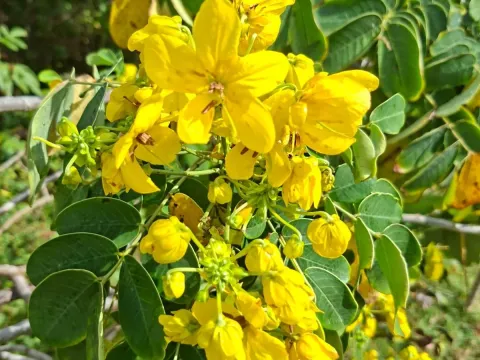
Scrambled egg bush
Cassia surattensis
Seeds of Cassia surattensis require scarification of the seed coat to enhance germination rates before they are sown in a nursery bed.
What the section contains
Scrambled egg bush
Sowing should take place in spring to ensure that seedlings have sufficient time to establish strong root systems before the next dormant period.
The planting medium must be loose, well-draining, and rich in organic matter to provide the necessary nutrients for initial growth.
Spacing between plants should be carefully planned to allow for sufficient air circulation, which prevents the development of fungal pathogens.
Once seedlings have reached a height of 15-20 centimeters, they are ready for transplanting into permanent garden locations or larger pots.
Cassia surattensis belongs to the Fabaceae family and is widely recognized for its bright yellow flowers and rapid growth characteristics.
The plant thrives in full sun exposure, which is critical for maximizing flowering intensity and maintaining a compact shrub form.
While tolerant of a wide range of soil types, it performs best in well-drained soils and requires protection from waterlogging at all times.
It is a drought-tolerant species once established, making it a suitable choice for landscaping in regions with dry climate patterns.
Regular pruning is highly recommended to control the plant's size and to stimulate the production of new flowering shoots throughout the season.
The most common pests affecting this shrub are caterpillars that can cause significant defoliation if populations are left unchecked.
Powdery mildew may occur in environments with high humidity and poor air circulation, necessitating better spacing between individual plants.
Root rot is a major threat in soils with poor drainage, often leading to the sudden decline and wilting of otherwise healthy shrubs.
Scale insects can occasionally infest the stems, requiring the use of horticultural oils or targeted biological control measures for management.
Keeping the area around the base of the plant clear of debris helps in reducing the overwintering of pathogens and harmful insect larvae.