
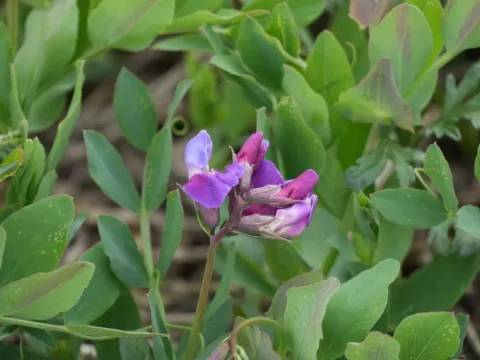
Sea pea
Lathyrus japonicus
Sea pea is a perennial herb belonging to the Fabaceae family. In natural conditions, seeds germinate in early spring when soil temperatures reach favorable levels for establishment.
What the section contains
Sea pea
When cultivated, seeds should be scarified to break dormancy and ensure uniform germination. Planting should take place in early spring into well-prepared soil beds.
Seeds are typically sown at a depth of 2 to 4 centimeters. Maintaining soil moisture during the germination stage is essential for successful stand establishment.
Propagation can also be achieved through vegetative methods, using rootstock cuttings, which allows for the rapid expansion of planting areas in suitable environments.
Early-stage development is relatively slow, so effective weed control is necessary to prevent competition for light and nutrients during the first weeks of growth.
This crop is highly adapted to coastal environments. It thrives in well-drained sandy or gravelly soils and exhibits remarkable tolerance to saline conditions.
Sea pea requires full sun exposure for optimal photosynthesis and development. Shaded areas significantly inhibit its growth and productivity.
The plant is highly resilient to cold temperatures and high winds. It has evolved to survive harsh seaside climates and remains dormant through cold winters.
It has low fertility requirements. Through nitrogen fixation, sea pea maintains its health even in nutrient-poor soils, contributing to soil fertility improvement over time.
- Preferred soil pH: 6.0 to 7.5.
- Drought tolerance: Excellent.
- Water requirements: Moderate to low.
Sea pea is susceptible to common legume diseases, particularly fungal infections like powdery mildew and various leaf rusts during periods of high humidity.
Root-feeding insects, such as pea weevils, represent a significant threat as they damage the nodules and impair the plant's ability to fix atmospheric nitrogen.
Defoliating insects can cause substantial leaf area loss, especially in young stands, impacting overall plant vigor and seasonal biomass production.
Waterlogging is a major threat to root health, often leading to crown and root rot, which can quickly degrade the quality of the crop stand.
Integrated pest management, including crop rotation and maintaining adequate drainage, is the primary approach for mitigating these risks in agricultural settings.