
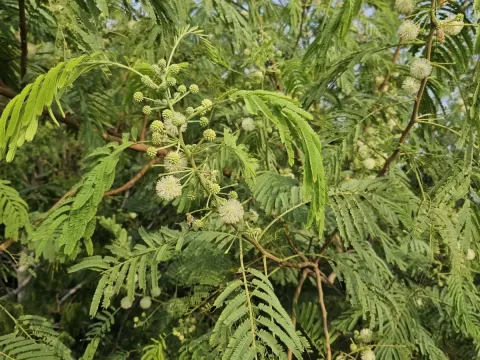
Leucaena pulverulenta
Leucaena pulverulenta
Leucaena pulverulenta is propagated mainly through seeds which possess a hard seed coat, necessitating scarification to ensure uniform and rapid germination.
What the section contains
Leucaena pulverulenta
Direct seeding in the field is typically timed to coincide with the onset of the rainy season to provide the moisture required for early seedling development.
Nursery propagation is a common professional practice where seedlings are grown in containers for several months before outplanting to the permanent site.
Planting density is adjusted according to the end-use, ranging from high-density setups for fodder production to wider spacing for timber development.
Seedling survival depends on initial weed control, as young plants are slow to establish and can be easily outcompeted by aggressive grasses.
The species thrives in warm tropical and subtropical environments and is sensitive to frost, which can severely damage or kill immature specimens.
It prefers deep, well-drained soils, although it shows remarkable adaptability to various soil types, including limestone and clay-based substrates.
As a legume, it is highly valued for its ability to fix atmospheric nitrogen, significantly improving soil fertility and reducing the need for fertilizers.
While known for drought tolerance, optimal growth and biomass production are achieved in regions with adequate rainfall or under supplemental irrigation.
Full sun exposure is essential for this plant; insufficient light results in spindly growth and a significant reduction in biomass potential.
The crop is highly productive, providing a large volume of foliage that serves as an excellent protein-rich supplement for ruminant livestock.
Wood yield is substantial due to its fast growth rate, making it an attractive candidate for short-rotation forestry and bioenergy production.
Regular harvesting of branches stimulates new vegetative growth, ensuring a consistent supply of fodder throughout the growing season.
The tree exhibits high recovery capacity after pruning, allowing for multiple harvests within a single year under favorable management conditions.
Yield metrics are influenced by the genetic quality of the seed and the level of management provided, particularly regarding soil nutrient maintenance.
The leucaena psyllid represents the most significant biological threat, capable of causing defoliation and severe growth suppression in young stands.
Root rot diseases are common in poorly drained or waterlogged soils, highlighting the importance of site selection and effective soil management.
In certain habitats, the species may behave as an invasive weed due to its prolific seed production, requiring careful monitoring to prevent spread.
Browsing by wild or domestic animals can severely impact newly established plantations, making protection measures essential during the early stages.
Integrated pest management strategies focusing on the use of resistant varieties and natural predators are recommended for sustained cultivation.
Fodder harvesting is carried out by lopping or pruning branches, which maintains the tree in a manageable state for subsequent collection.
Timber harvesting involves systematic rotation cycles, where the timing is chosen to maximize the yield of specific wood diameters for various industries.
Harvesting tools must be maintained in good condition to ensure clean cuts, which facilitate quicker healing and protect the tree from pathogens.
Post-harvest management is critical; cut foliage should be processed promptly to preserve its nutritional quality and prevent fermentation or mold.
Efficient extraction and storage methods are vital for large-scale operations to ensure the economic viability of the entire production cycle.