
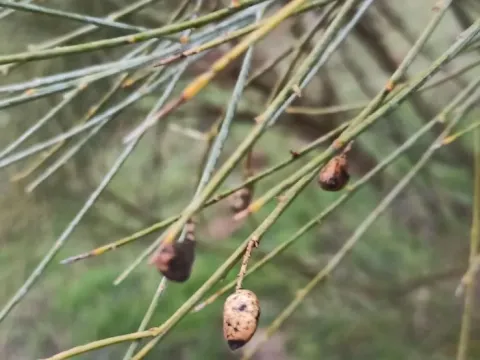
Retama sphaerocarpa
Retama sphaerocarpa
Retama sphaerocarpa is a perennial leguminous shrub that is typically propagated through seeds. Successful establishment requires a sunny location and soil temperatures ranging between 15 and 20 degrees Celsius during the sowing season, which usually occurs in early spring.
What the section contains
Retama sphaerocarpa
The seeds possess a hard, impermeable seed coat, making scarification a necessary pre-sowing treatment to ensure timely germination. Without mechanical or chemical scarification, the dormancy period of the seeds can significantly delay the emergence of seedlings.
For agricultural purposes, seeds are planted at a shallow depth of approximately 2 to 3 centimeters in well-drained, porous soil. Sufficient spacing between plants is crucial to avoid overcrowding, which can hinder the plant's development and limit its access to sunlight.
During the initial growth phase, seedlings require light but consistent irrigation to build their root systems. Once the plants transition from the juvenile to the adult stage, they become exceptionally hardy and require very little supplemental intervention.
Establishing a new plantation requires careful weed management during the first few months. Clearing the area around young shrubs prevents competitive stress, allowing the Retama to establish its deep, nitrogen-fixing root system without interference.
As a native of arid Mediterranean regions, Retama sphaerocarpa is highly adapted to drought and high-temperature environments. It thrives in locations where other crops struggle due to extreme heat and limited water availability.
The plant demonstrates a preference for sandy or rocky soils with excellent drainage characteristics. It is highly intolerant of waterlogged conditions, which can lead to rapid root rot, therefore site selection must prioritize slopes or loose, aerated soils.
Retama is well-known for its nitrogen-fixing capabilities, allowing it to flourish in nutrient-poor substrates. This biological advantage makes it an ideal candidate for soil restoration projects and the stabilization of desertified terrains.
The species requires full solar exposure throughout the day to sustain its high photosynthetic activity. Even minor periods of shade can lead to stunted growth and reduced seed production, impacting the plant's long-term sustainability.
Temperature tolerance is a key feature, as the plant withstands intense summer heat and moderate winter cold. However, extreme, prolonged frosts should be avoided, as they can cause damage to the younger, tender stems of the shrub.
The primary threat to Retama sphaerocarpa is over-irrigation and stagnant water, which trigger fungal pathogens. Maintaining optimal moisture levels in the root zone is the most effective way to prevent plant decline in commercial settings.
The presence of natural alkaloids in the plant's tissues provides a strong chemical defense against most insect pests. Consequently, the crop rarely suffers from significant damage by common agricultural herbivores or defoliating insects.
In humid or stagnant air environments, powdery mildew can occur on the foliage. To mitigate this risk, agronomists recommend maintaining adequate plant density to promote healthy airflow throughout the shrub canopy.
Rodent damage to the stems can be an issue during severe winter months when other food sources are scarce. Protective measures, such as installing physical barriers around the base of the stems, are recommended in regions with high rodent activity.
Disease management relies primarily on cultural practices rather than chemical treatments. By ensuring the soil remains light and free-draining, farmers can prevent almost all common diseases associated with this resilient leguminous species.