
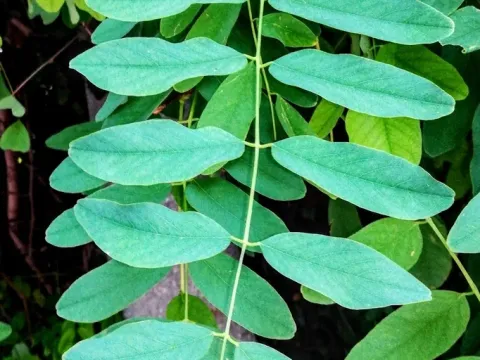
Robinia
Robinia L.
Robinia (Robinia L.) is a genus of deciduous trees and shrubs belonging to the Fabaceae family. The most widely known species is the black locust (Robinia pseudoacacia), which is highly valued for its adaptability and fast growth in diverse environments.
What the section contains


Robinia
Originating from North America, this genus has spread globally due to its hardy nature. It thrives in various climates, although it performs best in temperate zones where it can fully utilize its potential for biomass production.
Robinia is exceptionally drought-tolerant and thrives in full sun. It is a pioneer species capable of growing on poor, sandy, or stony soils where other plants struggle. It is frequently chosen for land reclamation projects and reforestation of degraded areas.
A distinctive biological characteristic of Robinia is its symbiotic relationship with nitrogen-fixing bacteria residing in root nodules. This enables the tree to improve soil fertility by naturally enriching it with nitrogen, making it a valuable species for soil improvement.
For optimal establishment, the tree requires well-drained soils and protection from severe winds during its early years. Once mature, it demonstrates high frost resistance and can tolerate the wide temperature fluctuations characteristic of continental climates.
Robinia is highly regarded in apiculture as a major nectar-producing tree. Its flowers are rich in sugar, producing a premium, clear, and mildly flavored honey that is highly sought after in international markets for its liquid stability.
The wood of the black locust is renowned for its durability, hardness, and high resistance to decay. It is widely used in outdoor construction, decking, fence posts, and high-quality furniture, often serving as a sustainable alternative to tropical hardwoods.
In agricultural systems, Robinia is extensively used for shelterbelts and windbreaks. These barriers protect crops from drying winds, reduce soil erosion, and create a favorable microclimate, which can significantly increase yields of neighboring field crops.
Due to its rapid growth rate, the species is increasingly utilized for short-rotation forestry. The biomass produced is harvested for wood chips, which are used as a renewable fuel source for biomass heating systems.
Additionally, the foliage provides effective cover for wildlife and helps maintain ecological balance. The tree's deep root system is instrumental in stabilizing steep banks, gullies, and areas prone to landslides.
Major diseases affecting Robinia include various fungal infections leading to heart rot and bark necrosis. These often develop when trees are subjected to environmental stress, mechanical damage, or improper pruning practices.
Common pests include leaf-mining insects and various species of leaf beetles. These pests can cause significant defoliation, which hampers photosynthesis and reduces the overall vigor and growth rate of the trees throughout the season.
Nematode infestations in the root zone can be particularly damaging in nurseries, where they hinder the development of seedlings and decrease their transplant survival rate in the field.
Effective management includes maintaining forest hygiene by removing infected branches and ensuring adequate spacing to promote airflow and reduce humidity within the canopy, which discourages fungal growth.
Chemical control is generally reserved for nurseries and young plantations under high pest pressure. Whenever possible, biological controls and integrated pest management (IPM) strategies are preferred to maintain the ecological health of the site.