
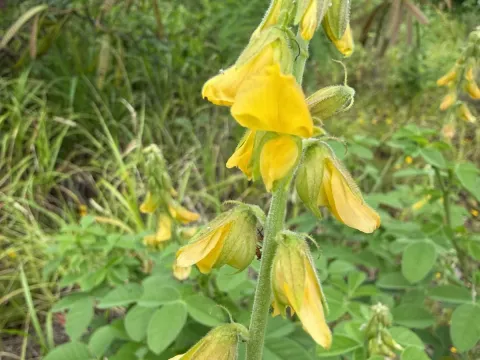
Rattlebox
Crotalaria incana
Crotalaria incana is a warm-season legume that requires high temperatures for optimal germination. Sowing should commence only after the risk of frost has passed and soil temperatures consistently exceed 20°C.
What the section contains
Rattlebox
In tropical and subtropical regions, the ideal time to sow is at the onset of the rainy season to capitalize on moisture. For use as a green manure, timing is crucial to ensure biomass reaches its maximum before flowering occurs.
The standard method is drilling in rows spaced 30 to 45 centimeters apart. This spacing facilitates weed management and allows the plants to develop strong, healthy root systems early in their life cycle.
Scarifying the seeds prior to planting is recommended to break dormancy and ensure uniform germination. Seeds should be buried at a shallow depth of 2 to 3 centimeters to maintain a proper balance between oxygen and moisture.
In temperate zones, this crop is managed as an annual. Sowing must be planned carefully so that the plants reach peak growth before the cooling temperatures of late autumn arrest their development.
Belonging to the Fabaceae family, Crotalaria incana is renowned for its remarkable ability to thrive in poor, acidic, and sandy soils. It is a highly resilient plant that can succeed where more demanding crops often fail.
The primary agricultural value lies in its nitrogen-fixing capabilities. Through a symbiotic relationship with soil bacteria, the plant converts atmospheric nitrogen into soil-bound forms, significantly boosting nutrient profiles.
It is an obligate sun-loving crop that requires full exposure to solar radiation. Shading from neighboring weeds or structures can significantly stunt development and reduce the overall biomass yield.
While somewhat drought-tolerant once established, Crotalaria incana thrives best with consistent moisture levels. However, it is highly sensitive to waterlogged soils and must be planted in areas with excellent drainage.
Temperature is the main driver of its growth rate. The ideal range is between 25°C and 32°C. Growth slows significantly below 15°C, making warm-season management essential for a successful harvest.
Yields of green biomass can reach between 20 to 40 tonnes per hectare under optimal conditions. This volume of organic matter makes it a superior candidate for large-scale soil restoration projects.
Nitrogen contribution is substantial, with the crop capable of sequestering up to 200 kg of nitrogen per hectare. This natural fertilization reduces the reliance on synthetic inputs in subsequent cropping cycles.
Seed production is generally reliable, averaging 500 to 1,000 kg per hectare, provided that insect pollinators are present. Protecting the flowering crop from broad-spectrum insecticides is vital for seed success.
The root system provides deep-soil aeration and physical structure improvement. This helps to mitigate soil compaction, facilitating better water infiltration and root penetration for succeeding commercial crops.
To achieve the highest nitrogen return, biomass should be incorporated into the soil just as the first flowers appear. This stage offers the best balance between nutrient concentration and ease of decomposition.
Root rot is the most common threat when the crop is subjected to overly moist or poorly drained soil conditions. Site selection is the most effective preventative measure against such diseases.
Various larvae and caterpillars can feed on the foliage, necessitating regular field scouting. Integrated pest management (IPM) should be prioritized to maintain the ecological balance of the field.
Crotalaria incana can act as a host for certain nematode species. Farmers should avoid planting this crop in rotation with highly susceptible vegetable species, such as tomatoes or peppers, without prior soil testing.
Aphid infestations may occur during prolonged dry spells, weakening the plant and potentially spreading viral infections. Maintaining plant vigor through optimal irrigation is the best form of cultural control.
- Rotate with non-host crops to minimize pathogen buildup.
- Treat seeds with appropriate inoculants for nitrogen fixation.
- Implement early weed control to minimize resource competition.
- Ensure soil drainage before planning a large-scale plot.
For green manure, the harvest is performed by shredding the plants with flail mowers or disc harrows at the early flowering stage. Rapid incorporation into the topsoil speeds up the mineralization process.
When harvesting for seeds, the process begins when the pods turn from green to brown. Careful timing is required to avoid pod shatter and subsequent yield loss due to seed scattering.
Seed harvesting should be performed in dry conditions. Threshing must be gentle to prevent mechanical damage to the seeds, which can lead to reduced viability and potential mold growth during storage.
Dried seeds should be stored in moisture-proof containers in a cool, dark environment. Proper storage conditions ensure that the germination rate remains high until the next planting season.
Post-harvest residues can serve as excellent mulch or compost material, effectively recycling the nitrogen fixed during the growing season back into the farming system.