
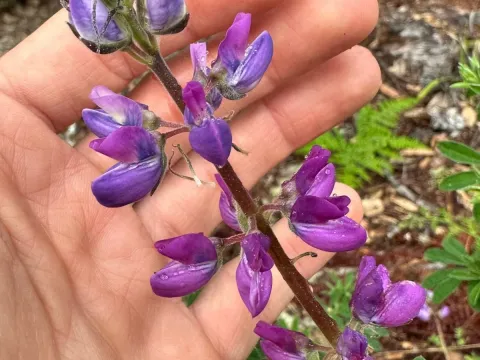
Riverbank lupine
Lupinus rivularis
Riverbank lupine, belonging to the Fabaceae family, is best established in early spring to take advantage of soil moisture and moderate temperatures.
What the section contains
Riverbank lupine
Seeds should be sown at a depth of 3 to 5 centimeters, depending on the soil texture, ensuring firm contact with the seedbed for uniform germination.
Proper inoculation of seeds with specific Rhizobium bacteria is a critical step to ensure biological nitrogen fixation for better growth.
When sowing for biomass or forage, higher seeding rates are recommended to suppress weeds effectively through rapid canopy closure.
For seed production, a lower planting density is preferred to allow individual plants to develop more lateral branches and produce more pods.
This crop is well-adapted to sandy and well-drained soils, showing a remarkable ability to thrive in nutrient-poor conditions where other crops fail.
Lupinus rivularis prefers full sun exposure and is highly sensitive to waterlogged soils, which can quickly lead to root rot and poor stand establishment.
It is moderately drought-tolerant once established, thanks to its deep taproot system, but needs adequate rainfall during the seedling development stage.
The plant performs best in slightly acidic to neutral soils; extreme pH values can interfere with micronutrient uptake and overall plant vigor.
Proper field drainage is essential for successful cultivation, as the species does not tolerate stagnant water or anaerobic soil conditions.
The yield potential of riverbank lupine depends significantly on soil fertility and the efficacy of the initial nitrogen-fixing nodulation on the roots.
Biomass production is generally high when the crop is harvested during the early flowering stage, providing high-quality organic matter for soil improvement.
Seed yields are variable and depend on the length of the growing season and the minimization of pod shattering during the ripening phase.
Strategic irrigation during the peak flowering period can significantly increase the seed set and overall yield in regions with late-season dry spells.
When integrated into crop rotations, the residual nitrogen benefits for subsequent crops often outweigh the direct grain yield value of the lupine.
Anthracnose is one of the most significant fungal diseases affecting this species, causing lesions on stems and potential crop failure in humid seasons.
Pests such as lupine aphids and seed-feeding weevils pose a threat to the plant's health and can substantially reduce harvest quality if left unmanaged.
Root rots caused by Fusarium species often appear in fields with poor drainage, highlighting the necessity of site selection based on soil characteristics.
Powdery mildew may occur in dense stands with high humidity, requiring airflow management and appropriate fungicidal treatments if the threshold is reached.
Integrated pest management strategies, including the use of certified disease-free seeds, are essential to maintain sustainable production levels.
Harvesting for forage should be timed precisely at the beginning of the blooming phase to maximize protein content and overall feed value.
Seed harvesting requires careful timing, as the pods are prone to dehiscence upon drying, leading to significant shattering losses if delayed.
Direct combining is common, but operators must reduce drum speeds to avoid mechanical damage to the seed coat, which is sensitive to impact.
Post-harvest drying of the seeds is vital to prevent spoilage and ensure longevity, aiming for a moisture content below 14 percent for storage.
Proper combine settings, including cleaning shoe adjustments, help in separating the relatively large lupine seeds from plant debris efficiently.