
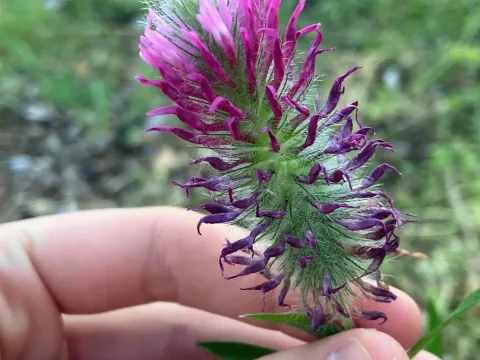
Purple clover
Trifolium purpureum
Purple clover, a member of the Fabaceae family, is a valuable annual forage crop. The optimal sowing time is in early spring when the soil temperature reaches 8–10 degrees Celsius, ensuring efficient moisture utilization after winter.
What the section contains
Purple clover
In regions with mild winters, autumn sowing is possible, allowing the plants to establish a root system before the onset of dormancy. Proper seeding rates are essential to ensure the desired stand density and competitive advantage against weeds.
The sowing depth should be kept between 2 and 3 centimeters. Given the small size of the seeds, planting too deep significantly reduces emergence rates, while planting too shallow risks desiccation by wind or sun exposure.
Field packing after sowing is a recommended agronomic practice to improve soil-to-seed contact, which is vital for uniform germination. In some cases, seed scarification may be necessary to improve field emergence rates for specific seed lots.
For irrigated systems, sowing dates can be more flexible, but mid-spring remains the most stable period for establishment. Dense sowing in early spring allows the crop to shade out competing weeds, reducing the need for herbicide intervention.
This crop thrives in well-drained loamy or sandy-loam soils with a neutral or slightly acidic pH. Waterlogging is particularly harmful, as it can lead to root rot and severely diminish overall plant vigor and survival rates.
Purple clover is a light-demanding crop and should not be planted in shaded areas. Sufficient solar radiation is necessary for vigorous photosynthetic activity, which facilitates the production of high-quality green biomass.
While the plant shows moderate drought tolerance, adequate moisture is required for maximum biomass production, especially during the branching and flowering phases. Supplemental irrigation can significantly increase yields in arid regions.
As a legume, it forms a symbiotic relationship with nitrogen-fixing bacteria. Therefore, soil nitrogen requirements are low, but phosphorus and potassium supplementation is often needed to support reproductive development and overall plant health.
A temperature range of 18–25 degrees Celsius is ideal for active growth. Extreme temperature fluctuations can negatively affect blooming intensity and seed set, so field selection should account for microclimatic conditions.
Yields of green biomass typically range from 20 to 40 tons per hectare under standard management practices. Advanced irrigation and optimal fertilization programs can push these yields toward the upper limit of the crop's potential.
Seed production is a critical economic use of the crop. Depending on the environment and pollinator availability, seed yields generally range between 300 and 600 kilograms per hectare, making it a profitable venture for specialized growers.
Pollinator activity is highly influential in seed yield. Because the plant is an excellent honey source, maintaining beehives near fields ensures high fertilization rates and better overall yield stability.
The nutritional value of the biomass peaks at the early flowering stage. Delaying harvest results in stem lignification, which decreases protein content and digestibility, making it essential to time the harvest carefully.
Intensive farming systems often utilize micro-nutrient applications, particularly boron and molybdenum, to enhance nitrogen assimilation. These treatments significantly contribute to both biomass accumulation and seed quality.
Fungal diseases like powdery mildew and anthracnose are the primary threats, especially under high humidity conditions. Densely sown fields are more susceptible, as poor airflow promotes the rapid spread of pathogens.
Common pests include the clover root curculio and aphids, which can cause significant damage to seedlings and foliage. Regular field scouting is necessary to detect infestations before they reach the economic injury level.
Effective disease management relies on strict crop rotation and the use of treated seeds. Avoiding fields previously planted with other legumes is crucial to minimize the buildup of host-specific soil pathogens.
Root-knot nematodes can also suppress growth, leading to chlorosis and stunted plants. Preventive management, including the use of certified seed and weed control, helps maintain the health of the crop throughout the season.
- Monitor fields for early signs of pathogen outbreaks.
- Apply fungicides when weather conditions favor disease spread.
- Control weeds that serve as alternative hosts for common pests.
Harvesting for green fodder is typically done at the peak flowering stage. Using forage harvesters to cut and chop the material immediately ensures the preservation of proteins and vitamins for silage or haylage production.
Seed harvesting requires precise timing. The plants are harvested when the majority of pods turn brown; waiting too long leads to shattering and seed loss, while cutting too early reduces seed maturity and storage life.
Post-harvest, seeds should be cleaned and dried to a moisture content of 12–14 percent. Proper drying is essential to prevent heating and mold development during storage, which would otherwise ruin seed viability.
Efficient logistics during the harvest window are vital to prevent quality degradation. Quick transport from the field to the drying or ensiling facility is standard procedure in modern, high-yield operations.
Storage facilities should be cool, dry, and well-ventilated to maintain seed longevity for the next season. Proper documentation of moisture levels and purity helps in marketing the seed product effectively.