
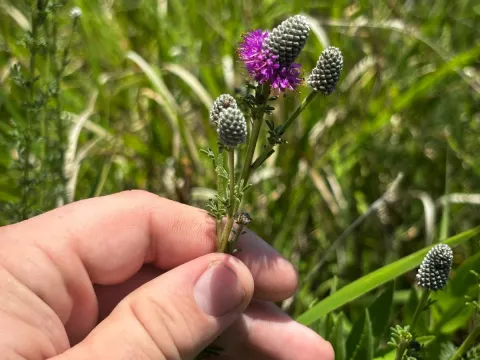
Purple prairie clover
Dalea purpurea
The sowing of Dalea purpurea is best performed in early spring or late autumn for dormancy seeding, allowing the seeds to undergo natural stratification for improved germination.
What the section contains
Purple prairie clover
Given the hard seed coat, mechanical scarification is highly recommended to break dormancy and ensure uniform emergence across the planted field area.
Seeds should be sown at a shallow depth of approximately 0.5 to 1 centimeter, as they require light to stimulate the germination process correctly.
Standard seeding rates for establishing a cover crop or forage stand typically range from 4 to 9 kilograms per hectare depending on the specific soil conditions.
Since the seedlings grow slowly during the establishment phase, they must be protected from aggressive weeds by mowing or applying light tillage between the rows.
Dalea purpurea is a hardy perennial legume belonging to the Fabaceae family, recognized for its deep taproot system and high nitrogen-fixing capacity.
The plant thrives in full sun exposure and well-drained, sandy or loamy soils, showing exceptional resilience to extended periods of summer drought.
It is well-adapted to environments with lower soil fertility, actively contributing to soil stabilization and the prevention of wind and water-driven erosion.
It prefers neutral to alkaline soil conditions and performs poorly in heavy, saturated clays where root aeration is restricted, leading to reduced vigor.
Beyond its ecological value, the plant is a significant nectar source for pollinators, making it a valuable addition to agricultural landscapes and buffer zones.
Common agricultural pests include various species of weevils and grasshoppers that can cause foliage damage, particularly when plants are in the young, succulent stage.
Fungal diseases like powdery mildew or root rot can affect the crop if the growing season experiences prolonged periods of excess rain and high atmospheric humidity.
Management strategy should focus on preventative measures, such as maintaining optimal plant spacing to allow sufficient airflow through the canopy and prevent moisture traps.
Integrated pest management (IPM) practices, including crop rotation and the encouragement of beneficial insects, are preferred over broad-spectrum chemical applications.
Frequent field scouting is essential during the early stages of growth to detect early signs of pest infestation, ensuring timely interventions if thresholds are exceeded.