
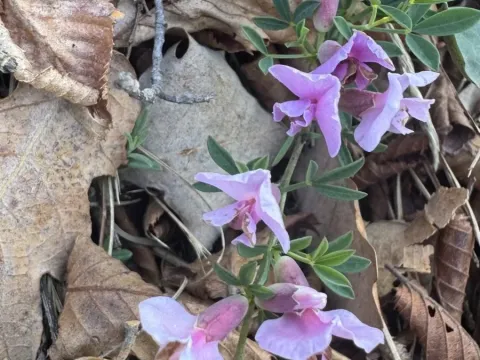
Purple broom
Cytisus purpureus
The Purple broom (Cytisus purpureus) is a perennial deciduous shrub belonging to the Fabaceae family. Originating from Central and Southeastern Europe, this plant is well-adapted to temperate climates, characterized by its low-growing, spreading habit that typically reaches a height of up to 60 cm.
What the section contains
Purple broom
Botanically, it is defined by its slender, flexible stems and trifoliate, dark green leaves. During the blooming season, the shrub produces dense clusters of bright purple, pea-like flowers. This visual display makes it a preferred species for ornamental landscapes and xeriscaping projects.
The plant thrives in full sun exposure and requires well-draining, slightly acidic to neutral soils. It is particularly sensitive to waterlogged conditions, which can lead to rapid root rot. Therefore, providing a sandy or gravelly substrate is crucial for ensuring the long-term vitality of the planting site.
Cultural management is straightforward due to the plant's drought tolerance. Once established, it requires little supplemental irrigation. Pruning should be carried out annually after flowering to maintain a dense shape and prevent the plant from becoming excessively woody or sparse at the base.
In terms of agricultural and horticultural use, the purple broom is excellent for erosion control on sandy slopes and rockeries. Its ability to fix atmospheric nitrogen contributes to soil fertility, making it a sustainable choice for restoring disturbed or nutrient-poor soil areas.
The species is susceptible to powdery mildew and various leaf spot fungi, especially in environments with poor air circulation or high humidity. Maintaining adequate spacing during planting is the primary cultural control method to minimize the risk of infection.
Pest issues are generally minor but may include infestations of broom moth larvae or aphids. In professional nurseries or large garden collections, scouting for these pests during early spring is recommended, with localized insecticide application only when economic or aesthetic thresholds are exceeded.