
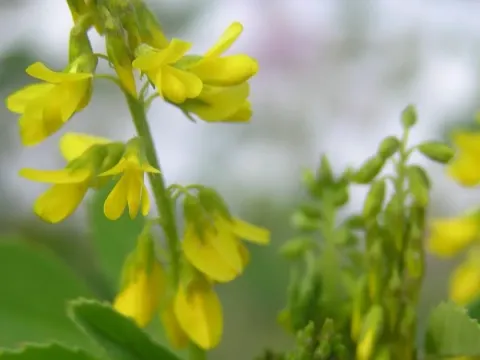
Elegant sweetclover
Melilotus elegans
Elegant sweetclover is an annual legume that is best sown in early spring as soon as soil temperatures reach 5-8 degrees Celsius. This timing allows the plant to take full advantage of spring moisture for rapid germination and establishment.
What the section contains
Elegant sweetclover
The recommended seeding rate for forage purposes ranges from 12 to 16 kg per hectare. The sowing depth should be maintained at 2-3 cm for heavier soils and up to 4-5 cm for lighter, sandy soils to ensure optimal moisture availability for seeds.
Scarification is an essential pre-sowing treatment for sweetclover seeds. Given the seed's hard coat, mechanical scarification significantly enhances germination rates, ensuring a uniform and high-density stand right from the start.
The crop is known for its strong early vigor, which allows it to outcompete weeds during the initial stages of development. This rapid growth significantly reduces the need for heavy chemical weed control early in the season.
In specific regions, late autumn or dormant seeding can be practiced, allowing the plants to emerge as soon as temperatures rise. This strategy provides an early first cutting of green mass, which is highly beneficial for livestock operations.
Elegant sweetclover exhibits excellent adaptability to various climates, being notably drought-tolerant and resilient. This makes it a reliable choice for areas with unpredictable rainfall patterns where other forage crops might struggle.
Soil requirements for this plant are centered on pH levels, with a preference for neutral to slightly alkaline soils. It performs poorly in highly acidic or waterlogged environments, preferring well-drained soils with good calcium content.
Good soil aeration is critical, as the nitrogen-fixing bacteria living in the root nodules require oxygen to function. This biological fixation process adds significant nitrogen to the soil, improving overall fertility and reducing the need for chemical fertilizers.
The crop is photophilic and requires full sunlight for healthy development. It should not be planted under the canopy of dense grain crops, as light limitation can lead to stunted growth and poor biomass production.
Its deep taproot system allows the plant to access moisture from lower soil profiles during dry spells. This physiological adaptation makes it one of the most robust crops during mid-summer heatwaves when the topsoil is completely dry.
Yields for elegant sweetclover can reach 200 to 350 quintals of green mass per hectare under optimal conditions. The actual yield is heavily influenced by soil fertility and the timely execution of sowing operations.
When grown as a green manure crop, it provides a massive amount of organic matter to the soil. Incorporating this biomass helps improve soil structure, water retention capacity, and overall biological activity for following crops.
Seed yields typically range from 4 to 8 quintals per hectare. Harvest management is crucial, as the seeds have a tendency to shatter if left in the field too long, requiring careful timing during the collection process.
The nutritional value of the green mass is high, especially in terms of protein content. It serves as an excellent component in forage mixes, contributing significantly to the health and growth of livestock.
The plant is a prolific honey producer, highly valued by beekeepers. Its long flowering period and high nectar sugar concentration ensure a steady honey supply, even during the mid-summer drought periods.
Fungal diseases like powdery mildew and various leaf spots represent the main threats, especially in areas with high humidity and poor air circulation. These diseases can significantly reduce the photosynthetic capacity of the plants.
Pests such as clover weevils can cause substantial damage to both foliage and flowers, potentially reducing seed yield. Integrated pest management, including field rotation and, when necessary, targeted insecticide application, is recommended.
Maintaining a strict crop rotation cycle is the best defense against soil-borne pathogens. Planting sweetclover on the same plot should be avoided for at least 4-5 years to break the lifecycle of specific pests.
Regular monitoring of the fields during the vegetative phase is essential for early detection of issues. Quick response to initial outbreaks helps in preventing widespread damage across the field.
Mechanical harvesting and proper field hygiene are also crucial for pest management. Removing residue from the field helps in disrupting the breeding grounds for many harmful insects associated with legumes.
The harvest for green fodder should occur at the onset of flowering. At this stage, the plant has the best balance of protein and fiber, making it most palatable and nutritious for livestock consumption.
For hay production, proper curing is vital. Given the plant's coarse stem, the use of a conditioner or crimper during mowing is highly recommended to speed up the drying process and prevent mold development.
Seed harvesting should be performed using a two-stage method when approximately 60-70% of the seed pods have reached maturity. This approach minimizes losses due to seed shattering while ensuring high seed quality.
When preparing silage or haylage, chopping the material to a length of 2-4 cm is critical. Proper compaction in the silo is necessary to exclude oxygen and promote healthy fermentation.
Incorporating crop residues back into the soil after harvest is a standard practice for maintaining soil health. The decomposing root system adds organic nitrogen, further enhancing the productivity of the land.