
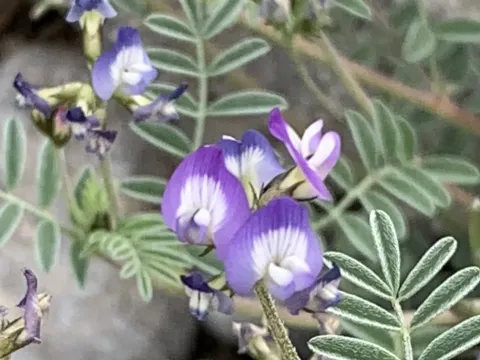
Emory milkvetch
Astragalus emoryanus
Emory milkvetch (Astragalus emoryanus) is a member of the Fabaceae family. It is an annual herbaceous plant adapted to the arid environments of North America.
What the section contains
Emory milkvetch
The plant originates from desert and semi-desert regions where it thrives under high light intensity. It is biologically optimized for survival in areas with minimal seasonal rainfall.
Regarding soil requirements, this species favors well-drained, sandy, or gravely soils. It is highly intolerant of waterlogged conditions, which can lead to root degradation.
Agrotechnical practices should focus on maintaining adequate space between plants to allow for proper airflow and sun exposure, which are critical for its lifecycle.
The agricultural potential of this plant is niche. It requires careful evaluation of local soil chemistry before any large-scale sowing, due to the genus's known capacity to accumulate minerals from the soil.
Primary threats include root rot pathogens, which are exacerbated by high humidity or poor soil drainage. Keeping the root zone well-aerated is the best preventative measure.
Insect pests, specifically those targeting the legume family like aphids and weevils, can cause significant damage to the foliage and the seed-bearing pods.
Competition from invasive weed species is a major challenge during the early growth stage. Because the plant grows relatively slowly, effective weed control is essential.
Viral infections can affect the crop's vigor, often introduced by sap-sucking insects. Monitoring the insect population is necessary to maintain a healthy stand.
Maintaining a balanced crop rotation cycle helps mitigate the accumulation of soil-borne pathogens and ensures the long-term viability of the cultivation area.