
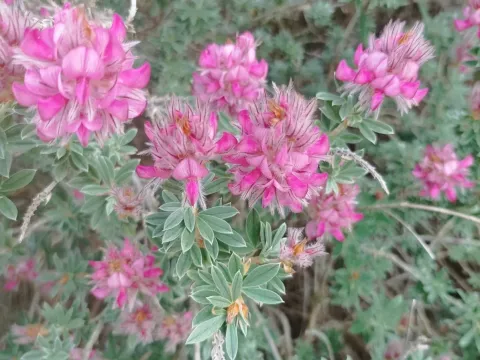
Ebenus
Ebenus
Ebenus belongs to the Fabaceae family. These are perennial herbaceous plants or subshrubs that naturally occur in regions of the Eastern Mediterranean, including Turkey and Greece. The crop is valued for its high ornamental qualities and its ability to adapt to rocky, nutrient-poor soils.
What the section contains


Ebenus
The plant prefers well-drained, sandy, or loamy soils with a neutral to slightly alkaline pH. It is extremely sensitive to waterlogging, making the choice of a site on elevated ground with natural water drainage a critical factor for successful vegetation.
For optimal development, Ebenus requires intense sunlight throughout the entire day. In conditions of partial shade, the stems tend to stretch and lose density, and flowering intensity drops significantly, making the crop unsuitable for cultivation under tree canopies.
The crop is highly drought-tolerant, which allows it to be used in regions with hot and dry summers. However, during the active growth phase, Ebenus responds positively to moderate watering, provided that there is absolutely no water stagnation in the root system.
In regions with harsh winters, Ebenus requires reliable protection or must be grown as a container plant. The plant does not tolerate sharp temperature fluctuations combined with high humidity, which can lead to frost damage to young shoots.
The primary threats to Ebenus are fungal diseases caused by excessive soil moisture accumulation and poor aeration of the root zone. Root rot is frequently observed, which can lead to the rapid decline and death of the plant.
Among pests, various species of aphids and spider mites can cause significant damage, especially as they multiply rapidly during dry periods. Preventive inspections and the application of biological insecticides at the first signs of infestation are recommended to manage these populations.
When agricultural practices are neglected, particularly regarding overwatering, the plant becomes vulnerable to powdery mildew. This manifests as a white coating on the leaves, which disrupts photosynthesis and weakens the overall health of the shrub.
Pest management is often complicated by the pubescent (hairy) nature of the leaves in many Ebenus species, which reduces the efficacy of contact pesticides. Therefore, systemic plant protection products, applied either as a root drench or via evening spraying, are more effective.
Disease prevention consists of strictly following a proper watering schedule and ensuring good air circulation around the bush. Annual sanitary pruning is also recommended to remove damaged shoots, preventing the spread of infections.