
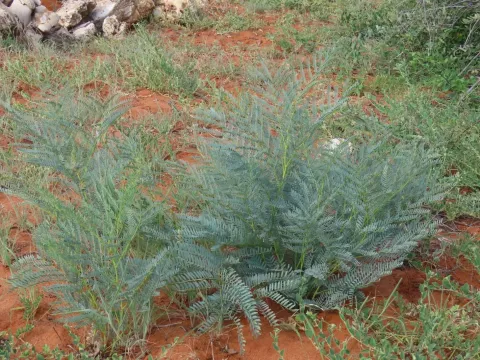
Elephantorrhiza
Elephantorrhiza
Propagation of Elephantorrhiza is primarily achieved through seeds, which feature a tough coat requiring scarification. To successfully germinate the seeds, growers often use hot water treatment or mechanical abrasion to improve water uptake before sowing.
What the section contains

Elephantorrhiza
Seeds should be planted in a well-draining, sandy soil medium at a shallow depth of approximately 2 to 3 centimeters. Proper drainage is the most critical factor to prevent damping-off during the sensitive early stages of seedling development.
The ideal sowing window aligns with the onset of the rainy season, allowing the plants to establish a deep root system before the dry season begins. Maintaining consistent warmth in the seedbed is essential for breaking dormancy.
In nursery settings, deep pots are required to accommodate the rapid downward growth of the taproot. Transplanting must be performed with extreme caution, as the root structure is highly susceptible to physical damage which hampers later survival.
Spacing should be managed to ensure adequate sunlight, as Elephantorrhiza is a light-demanding genus that thrives in open savanna landscapes. Overcrowding can significantly reduce the vigor of young specimens.
Elephantorrhiza is a genus in the Fabaceae family, native to southern Africa, where it has evolved to endure arid conditions and seasonal wildfires. Its primary adaptation is the development of enormous, woody rhizomes that store nutrients and moisture.
The plant requires full sun exposure and performs poorly in shaded environments. Its growth habits make it highly suitable for xeriscaping or restoring degraded lands in dry climates where other crops would fail.
Soil requirements are relatively undemanding, favoring rocky or sandy terrains with excellent permeability. The plant is highly sensitive to waterlogged soils, which promote fungal infections in the massive root systems.
As a legume, Elephantorrhiza can form symbiotic relationships with nitrogen-fixing bacteria, contributing to soil health by naturally improving nitrogen levels in the rhizosphere.
Environmental resilience is the hallmark of this genus, allowing it to withstand prolonged droughts and extreme heat, making it an interesting candidate for sustainable agriculture in water-scarce regions.
The primary economic use of Elephantorrhiza involves the extraction of tannins from its large roots, which have historically been utilized in leather tanning processes. The roots are known for their high concentration of tanning agents.
Harvesting involves the extraction of these woody rhizomes, which can extend deep into the soil profile. This is usually performed during the dormant period to ensure the highest concentration of phytochemicals and to allow the plant time to recover.
Once harvested, the roots are cleaned, chopped into smaller pieces, and air-dried to prevent microbial degradation. Proper storage is necessary to preserve the chemical integrity of the tannin extracts.
In addition to industrial leather applications, various species within the genus are utilized in traditional medicine, highlighting their pharmacological importance. Sustainable harvesting practices are encouraged to prevent over-exploitation of natural populations.
The ability of the plant to regenerate from its root system after harvesting makes it a potentially renewable source of raw material, provided that the harvest intervals are managed with ecological care.