
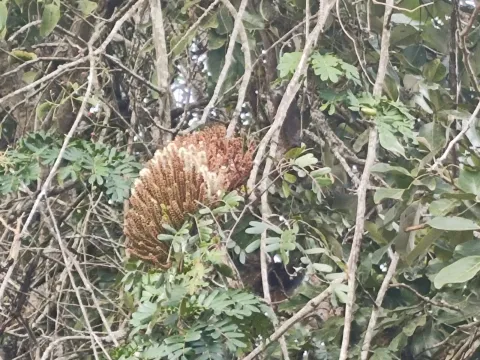
Entada
Entada
Planting Entada in tropical climates typically coincides with the beginning of the rainy season, which provides the seeds with the necessary moisture for germination.
What the section contains


Entada
In regions with a distinct seasonal moisture deficit, seeds are sown in prepared substrate, maintaining a stable soil temperature of at least 25 degrees Celsius.
The use of seeds with a hard outer shell requires preliminary scarification to accelerate the germination process and ensure uniform crop emergence.
When cultivating for industrial or research purposes, it is recommended to plant seedlings in containers to monitor root system development in the early stages.
The planting density depends on the cultivation goals, but it is necessary to maintain a distance of at least three meters between plants to ensure normal vegetation.
Entada belongs to the Fabaceae family and is a woody vine distributed in tropical and subtropical regions across the globe.
The crop prefers well-drained, fertile soils capable of retaining moisture without the risk of water stagnation at the root system, which can lead to rot.
Optimal plant growth requires a high degree of light, although young specimens can tolerate short-term shading in the lower forest tiers.
The most important growth factor is the presence of reliable supports, as Entada can reach significant sizes, using its tendrils to climb into tree canopies.
The temperature regime must remain stably warm throughout the growing season, as even short-term frost is detrimental to this tropical species.
The primary economic output of the crop is the giant pods, which can reach two meters in length and contain large, hard-shelled seeds.
Entada seeds possess a unique ability to float in saltwater for long periods without losing viability, which determines their natural dispersal along oceanic coasts.
The bark, seeds, and roots find application in local medicine and household use, possessing specific phytochemical properties and containing saponins.
The biomass yield of the vine is extremely high, making it a promising source of organic fiber in some regions of Africa and Southeast Asia.
Traditional use includes the creation of decorative jewelry from the seeds, which are highly valued in souvenir markets and applied arts.
Typical pests for Entada include tropical insects that damage both the leaf blade and the reproductive organs of the plant.
Under high humidity conditions, the vine is prone to fungal diseases that affect the trunk and lead to premature leaf drop.
Nematodes residing in the soil can cause significant damage to the root system of young plants, slowing growth and reducing overall vitality.
Incorrect agricultural practices, such as excessive watering, can provoke root rot, which is the most frequent cause of crop loss in greenhouse conditions.
To prevent the spread of pathogens, it is recommended to follow crop rotation rules and regularly sanitize planting material before transplanting.
Harvesting the pods requires caution, as Entada fruits have a hard woody shell that complicates the process of opening and processing.
The optimal harvest time is determined by the color change of the pod from green to brown, indicating full seed maturation inside the shell.
After harvesting, the fruits need to be dried in well-ventilated conditions to prevent mold development on the surface of the pods during storage.
The extracted seeds are sorted by size and quality, after which they can be stored for a long time in a dry, cool place without losing biological activity.
Transportation of the harvested material is straightforward due to the high durability of the outer shell, which protects the contents from mechanical damage.