
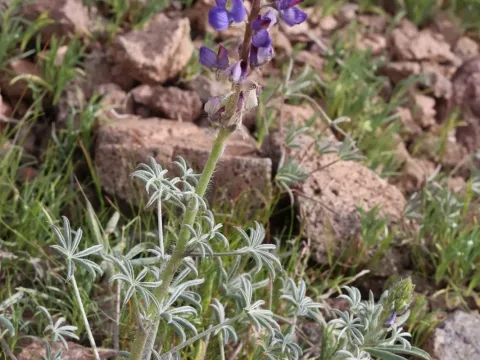
Lupinus sparsiflorus
Lupinus sparsiflorus
Lupinus sparsiflorus, commonly known as Coulter lupine, is an annual flowering plant belonging to the Fabaceae family. It is native to the southwestern United States and northwestern Mexico, particularly thriving in arid environments.
What the section contains
Lupinus sparsiflorus
The plant features slender, erect stems and palmately compound leaves. Its inflorescences are characterized by sparsely arranged, vibrant blue-to-violet flowers, which distinguish this species from other relatives in the Lupinus genus.
As a legume, this species maintains a symbiotic relationship with nitrogen-fixing bacteria in its root nodules. This biological process significantly enhances soil fertility when the plant is used as a cover crop or green manure.
Farmers appreciate this plant for its ability to stabilize loose, sandy soils and its relative ease of establishment. It serves as an excellent candidate for low-input agricultural systems in Mediterranean or desert climates.
Sowing typically occurs in early spring once the risk of severe frost has passed. Seeds should be placed at a depth of approximately 3 centimeters in well-prepared, loose soil to ensure optimal germination rates.
Sunlight exposure is critical for the healthy development of Lupinus sparsiflorus. It requires full sun conditions to produce abundant blooms and maintain structural integrity during its growth cycle.
Soil drainage is perhaps the most important physical requirement. The plant is highly susceptible to root rot if grown in heavy, waterlogged clay soils, preferring instead sandy or gravelly textures.
The species is exceptionally well-adapted to drought, making it suitable for regions with limited rainfall. Once the root system is established, it can thrive with minimal supplemental irrigation.
Temperature tolerance ranges from cool spring temperatures to the intense heat of summer. It is highly resilient in desert-like conditions but prefers moderate warmth during the early flowering stages.
Soil fertility levels do not need to be excessively high. In fact, Lupinus sparsiflorus thrives in nutrient-poor soils where its ability to fix nitrogen provides a competitive advantage over other vegetation.
Root rot, specifically caused by Pythium or Phytophthora species, represents the primary threat to stands located in poorly drained areas. Proper site selection and drainage management are the best preventative strategies.
Aphids can cause significant damage by feeding on the sap of tender new growth. They often congregate in large numbers on the flower stalks, leading to stunted growth and potentially transmitting viral plant diseases.
Lupine anthracnose, caused by the fungus Colletotrichum, can manifest as necrotic lesions on stems and pods. Using certified disease-free seeds and rotating crops is essential for managing this pathogen.
Powdery mildew is common in environments with fluctuating humidity levels. It appears as a white, dusty growth on the leaf surfaces, which can be mitigated by ensuring adequate air circulation between rows.
Weevils may impact the crop by damaging seedlings or seeds within the developing pods. Scouting for these insects during the peak vegetation phase is recommended to determine if chemical or biological control measures are necessary.