
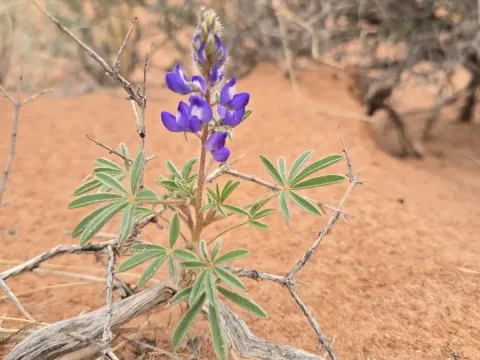
Lupinus pusillus
Lupinus pusillus
Lupinus pusillus, commonly known as the tiny lupine, is a herbaceous annual plant belonging to the Fabaceae family. It is recognized for its ability to thrive in demanding environments where other agricultural crops struggle to establish themselves effectively.
What the section contains
Lupinus pusillus
The sowing process for this crop is best initiated in early spring to capitalize on the moisture remaining in the soil from winter precipitation. Proper site preparation, including light tillage to create a fine seedbed, is essential for achieving optimal emergence rates.
Seed depth should be carefully managed, generally between 2 and 4 centimeters, to ensure the seedling has sufficient energy to emerge while remaining protected from surface desiccation. Ensuring good soil-to-seed contact is paramount for uniform germination.
Before sowing, it is crucial to inoculate the seeds with specific strains of nitrogen-fixing bacteria. This biological intervention is vital for the crop's ability to fix atmospheric nitrogen, thereby reducing the need for synthetic fertilizers throughout the growth cycle.
Plant density should be balanced to allow for adequate airflow and sunlight penetration. Overcrowding can lead to increased competition for nutrients and moisture, potentially hindering the plant's overall vigor and development during the vegetative stage.
Lupinus pusillus is specifically adapted to sandy and coarse-textured soils. Its botanical architecture is designed to manage nutrient scarcity, making it a suitable candidate for marginal lands that require biological improvement through nitrogen fixation.
Climate tolerance is a key feature of this species, as it exhibits significant resilience to arid and semi-arid conditions. It is well-suited for regions where rainfall is irregular, as its root system is efficient at extracting deep-seated soil moisture.
Regarding soil pH, the plant prefers neutral to slightly acidic conditions. It generally struggles in highly alkaline environments, where the availability of certain micronutrients becomes restricted, potentially leading to signs of chlorosis or stunted growth.
Sunlight exposure is a critical requirement, as the species does not perform well in shaded environments. Ensuring that fields are free of competitive weeds during the early vegetative phase is necessary to prevent shading and nutrient theft.
Temperature fluctuations are generally tolerated well by the plant, provided they do not occur during the sensitive flowering and pod-filling stages. A stable, moderately warm environment during the reproductive phase is ideal for maximizing seed yields.
Fungal diseases represent the most significant threat to Lupinus pusillus, particularly in regions with high humidity levels. Diseases such as anthracnose and root rots can cause severe damage to the plant population if preventative measures are not strictly followed.
Insect pests, including various species of weevils and aphids, can cause localized damage to foliage and developing pods. Early detection and the implementation of an Integrated Pest Management (IPM) strategy are essential for maintaining crop health.
Crop rotation remains the most effective prophylactic measure against soil-borne pathogens. By ensuring that the land is not cropped with legumes for several consecutive years, growers can effectively break the cycle of disease transmission within the soil.
Seed treatment with authorized fungicides is recommended to provide a protective barrier during the critical emergence phase. This reduces the risk of seedling damping-off and sets the stage for a healthy, robust crop that is better equipped to resist stress.
Regular field scouting is highly advised to monitor for the first signs of disease or pest infestation. Swift action, whether through mechanical removal of affected plants or the application of appropriate treatments, helps to contain threats and secure harvest potential.