
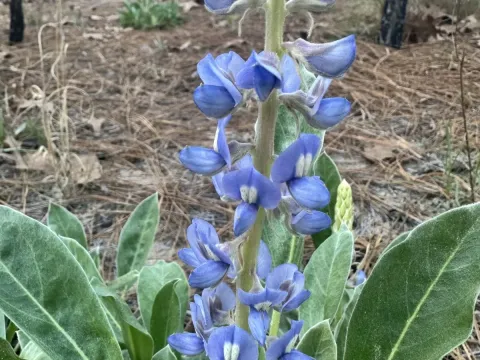
Lupinus diffusus
Lupinus diffusus
Lupinus diffusus, commonly known as the spreading lupine, is a perennial legume species that plays a significant role in nitrogen fixation and soil restoration.
What the section contains
Lupinus diffusus
The sowing window typically opens in early spring, once the soil has sufficiently warmed, allowing the plant to establish its deep taproot before the arrival of summer heat.
Seed scarification is highly recommended prior to planting to ensure uniform and rapid germination, given the hard coat characteristic of many legume seeds.
Row planting with spacing adapted to local equipment is standard practice, aimed at achieving a uniform density that optimizes biomass production.
For cover crop applications, the planting rate should be increased to ensure complete soil coverage, which protects the surface from erosion and limits weed growth.
This species thrives in sandy, well-drained soils, showing a remarkable ability to adapt to environments where nutrients are relatively scarce.
It is sensitive to waterlogging and soil compaction, requiring a loose soil structure to facilitate deep root penetration and proper gas exchange.
The climate requirements include full exposure to direct sunlight, as the plant is not shade-tolerant and will exhibit stunted growth in low-light conditions.
Soil pH management is essential, though the species is naturally tolerant of acidic conditions that might inhibit other conventional crops.
Proper nutrient management, focusing on minimal phosphorus and potassium supplementation, ensures healthy development and maintains the nitrogen-fixing capacity of the roots.
Fungal pathogens such as Fusarium and Anthracnose pose a serious risk to Lupinus diffusus, particularly under conditions of high humidity or poor field drainage.
Insects like aphids and specific legume-feeding beetles can cause significant damage during the early stages of plant development and flowering.
- Regular field scouting is necessary to identify early symptoms of infestation.
- Crop rotation is a critical preventive measure against soil-borne pathogens.
- Integrated pest management strategies should be prioritized over blanket chemical applications.
If chemical interventions become necessary, products must be selected for their efficacy against specific pests while minimizing impacts on beneficial pollinator populations.
Maintaining balanced field hygiene, including the removal of infected plant debris, significantly reduces the survival rate of pathogens between cropping seasons.