
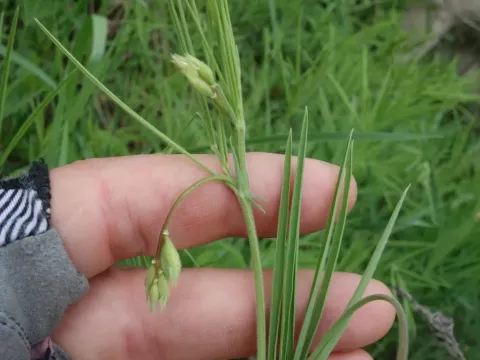
Lathyrus pallescens
Lathyrus pallescens
Lathyrus pallescens is a spring-sown crop that requires early seeding. Planting should occur as soon as the soil is workable to ensure the seeds utilize the stored spring moisture, which is vital for initial development and establishment.
What the section contains
Lathyrus pallescens
The sowing depth is typically 4 to 6 centimeters, depending on soil texture and moisture content. Precise planting depth helps ensure uniform emergence and minimizes the risk of seedling damage during the early growth stages.
A seeding rate of 1.0 to 1.5 million viable seeds per hectare is standard for this crop. Proper spacing allows for optimal light penetration and nutrient utilization throughout the growing season.
Narrow-row spacing is recommended as it helps the crop canopy close faster, effectively shading out weeds. This cultural practice reduces the reliance on herbicides during the critical early growth phases.
Post-sowing rolling is a vital agronomic step to improve seed-to-soil contact. This practice promotes rapid and uniform germination, which is particularly beneficial in regions prone to dry spring conditions.
This crop is highly valued for its exceptional drought tolerance and its ability to thrive in harsh, semi-arid environments. It is well-adapted to continental climates where seasonal precipitation is unpredictable.
Lathyrus pallescens prefers light to medium-textured soils. It performs well in neutral or slightly alkaline conditions and is highly adaptable to calcareous soils commonly found in many agricultural regions.
The crop does not tolerate waterlogged soils or high water tables. Avoiding areas with poor drainage is essential, as saturated conditions can lead to root diseases and stunted growth during the vegetative stage.
Phosphorus and potassium fertilizers are the most beneficial inputs for this crop, as they support root development and nitrogen fixation. Nitrogen application should be limited to avoid suppressing the natural symbiotic activity.
Ample sunlight is required for optimal photosynthesis. The crop flourishes in open, well-ventilated fields where excessive moisture from humidity can evaporate quickly, preventing fungal outbreaks.
The grain yield of Lathyrus pallescens typically ranges from 15 to 25 decitonnes per hectare, depending heavily on the season's rainfall and the efficacy of the soil management practices employed.
As a forage crop, it provides high-quality biomass if harvested during the early flowering phase. This timing ensures the highest protein content and nutritional value, making it an excellent feed source for livestock.
Harvesting challenges include potential seed shattering if the crop is left too long in the field. Using modern harvesting equipment and selecting resistant varieties are key strategies for maximizing net yield.
The crop's yield stability makes it a reliable component in sustainable farming systems. By integrating it into crop rotations, farmers can enhance soil nitrogen levels for subsequent cereal crops.
- Optimal seed moisture for storage is 14–16%.
- High protein density is achieved through early harvest.
- Root symbiosis significantly boosts biomass productivity.
Root rot and Ascochyta blight represent the primary fungal threats to this species. These diseases are most prevalent in damp, humid conditions or when the crop is planted repeatedly in the same soil.
Nodule weevils are common insect pests that target the young seedlings. Monitoring populations during the emergence stage allows for timely intervention if necessary to protect the stand density.
Seed weevils pose a significant threat to grain production by damaging the developing seeds. Protective measures, including field isolation and appropriate insecticide application, are required for seed-producing fields.
Effective management includes seed treatment with fungicides before sowing to protect against soil-borne pathogens. This simple step significantly improves seedling survival rates across varying field conditions.
Integrated pest management, combining crop rotation and biological monitoring, is the most sustainable approach to maintaining healthy yields. This strategy keeps pest populations below the economic threshold level.