
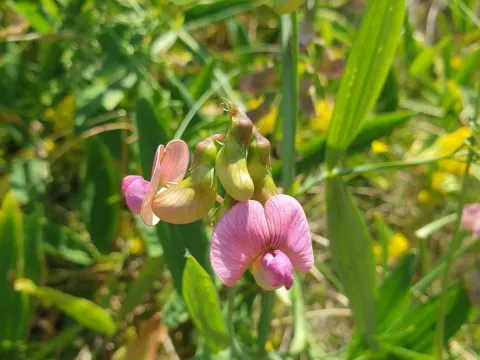
Perennial peavine
Lathyrus heterophyllus
Perennial peavine is a resilient herbaceous plant belonging to the Fabaceae family, prized for its longevity and persistence in forage systems. Seeding should ideally occur in early spring when the soil has reached the required physical maturity to ensure optimal moisture availability for germination.
What the section contains
Perennial peavine
Effective seed placement requires a depth of 3 to 5 centimeters, depending on the soil structure, to facilitate strong root establishment in the first year. Careful seedbed preparation is essential to minimize competition from weeds and to ensure uniform seedling emergence across the entire field.
While late-autumn sowing is possible in warmer regions, spring sowing remains the preferred method for establishing reliable and productive stands. Seeding rates should be adjusted based on the intended use, with higher densities typically recommended for hay production compared to pasture grazing applications.
Since the plant develops a robust root system, adequate weed control during the seedling stage is crucial for successful establishment. Selecting fields with minimal presence of aggressive perennial weeds significantly increases the chances of forming a dense and productive stand.
Seedlings typically emerge within 12 to 18 days under favorable soil temperatures of at least 6–8 degrees Celsius. Early growth is somewhat slow, requiring vigilant management during the initial development phase to protect the young plants from nutrient and space competition.
Perennial peavine is adaptable to a wide range of soil types, including loams and sandy soils, though it thrives best in fertile, well-drained conditions. It is notably drought-tolerant and winter-hardy, making it a reliable crop for regions characterized by unpredictable precipitation patterns.
The plant has high light requirements and should not be cultivated in shaded areas or near dense woodland edges. A neutral to slightly alkaline soil pH is optimal, as it supports the symbiotic activity of nitrogen-fixing bacteria and promotes overall plant vigor.
Adequate sunlight exposure throughout the growing season is essential for maximizing biomass production. While the species can tolerate short periods of waterlogging, poor drainage in the root zone can increase the risk of crown rot, particularly during the dormant spring season.
Agronomic management should prioritize the application of phosphorus and potassium fertilizers to improve plant productivity and ensure high-quality seed maturation. Nitrogen applications are generally unnecessary and should be avoided unless the soil fertility is extremely poor.
Perennial peavine adjusts well to varying temperatures typical of temperate climates, maintaining viability across different elevations. Inter-row cultivation during the first year is recommended to reduce soil compaction and enhance aeration in the root zone.
The biomass yield of Perennial peavine is highly dependent on the number of cuts and overall soil fertility, with the plant capable of producing 2 to 3 harvests per season. High regeneration potential allows the stand to recover quickly after each mechanical harvest.
Average yields of fresh forage range from 150 to 250 quintals per hectare, depending on the intensity of management practices. Intensive cultivation techniques can result in consistently high-quality hay rich in essential proteins and minerals.
Seed yield remains stable even under fluctuating weather conditions during the flowering phase. Timely harvesting of seed plots can provide between 4 and 6 quintals of high-quality propagation material per hectare.
Biomass accumulation peaks by the end of the full flowering stage, after which nutritional quality begins to decline due to stem lignification. For superior forage quality, it is recommended to harvest the crop before the onset of pod maturation.
Including this crop in standard rotations improves soil structure and boosts nitrogen levels, which benefits subsequent grain crops. This makes Perennial peavine a valuable asset for farmers seeking to integrate sustainable and regenerative practices into their operations.
Powdery mildew is a common disease affecting Perennial peavine, particularly in conditions with high humidity and poor airflow. Preventive measures include maintaining recommended seeding rates and ensuring adequate spacing to promote natural ventilation.
Root rot diseases pose a significant threat when the crop is grown continuously on the same land, emphasizing the importance of diverse crop rotation. Regular monitoring of the root system is essential for the early detection and management of fungal outbreaks.
Pests such as pea weevils and aphids can cause considerable damage to young seedlings and generative organs. When damage exceeds economic thresholds, the application of targeted insecticides may be necessary to protect both vegetative biomass and seed quality.
Seed-feeding insects can degrade the quality of harvested grains, reducing their viability for future planting. Integrated pest management strategies, including timely harvesting to shorten the window of vulnerability, are effective in controlling these threats.
Avoiding excessive nitrogen fertilization is critical, as it encourages rapid leafy growth that is more susceptible to fungal pathogens. Fungicides should only be used as a last resort when direct symptoms of disease become evident in the field.
Hay harvesting should occur during the peak flowering stage to ensure the highest concentration of nutrients and vitamins in the forage. Rapid drying of swaths is necessary to prevent the loss of quality and to maintain the forage's nutritional profile.
Seed harvesting should be performed once the pods in the lower and middle parts of the plants are fully mature and discolored. Direct combining is viable if maturation is uniform, while swathing is preferred for uneven crops to ensure consistent drying.
When using a swathing method, the cut biomass should remain in the field until grain moisture reaches 14–16 percent to minimize seed damage during threshing. Proper machine calibration is essential to protect the seed coat and ensure high germination rates.
Post-harvest processing involves cleaning and drying seeds to standard moisture levels to ensure safe storage. Properly stored seeds retain high vigor for 3 to 4 years if kept in climate-controlled conditions.
The final cut of the season should be completed at least 30–40 days before the first hard frost to allow the plants to accumulate sufficient carbohydrates in their roots for overwintering. This practice is key to maintaining stand productivity for the following season.