
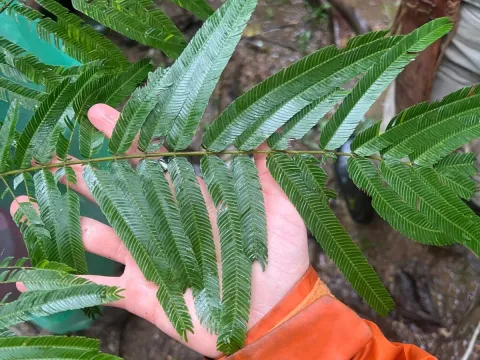
Pentaclethra
Pentaclethra
Propagation of Pentaclethra is mainly performed through seeds, which lose viability quickly, requiring sowing immediately after harvesting. Preparing the substrate in nurseries with high humidity is considered optimal to protect seedlings from direct sunlight during early growth stages.
What the section contains


Pentaclethra
Seeds should be planted at a depth corresponding to their size, maintaining sufficient intervals to prevent root system competition. The germination process requires consistently high temperatures typical of equatorial climates and abundant irrigation.
Once seedlings reach a height of 30–50 centimeters, they are transplanted to a permanent location within agroforestry systems. It is crucial to minimize damage to the taproot, which develops intensively in this species and ensures the stability of the young tree.
Planting schedules are linked to the onset of the rainy season, allowing plants to establish before the onset of the dry season. In large-scale operations, intercropping with existing forest species or planting on restored tropical land is common.
The period from planting to active fruiting ranges from 5 to 7 years, necessitating long-term planning for farm management. Maintenance of young plantings involves regular weeding to protect slow-growing trees from competing vegetation.
Pentaclethra is a member of the Fabaceae family and a tropical tree requiring a humid climate with at least 2000–3000 millimeters of annual rainfall. The crop is highly sensitive to moisture deficits and cannot tolerate prolonged drought periods.
Successful growth requires deep, well-drained alluvial soils often found in river floodplains. While the plant can tolerate acidic soils, a high content of organic matter is optimal for maximum productivity.
The tree is characterized as shade-tolerant in early life stages; therefore, agricultural technologies often utilize a gradual thinning method where the canopy of other trees provides protection for the seedlings.
The temperature must remain within the range of +22°C to +30°C throughout the year. Any significant drops in temperature negatively affect physiological processes and may result in the loss of the plantation.
Pentaclethra has the ability to fix nitrogen through a symbiosis with root nodule bacteria, making it a promising crop for improving soil fertility within agroforestry systems.
The primary harvest product consists of large pods containing seeds with a high fat content. The yield of a single mature tree varies significantly depending on growing conditions and planting density on the plantation.
Pentaclethra seeds contain up to 30% of valuable oil rich in behenic and lignoceric acids. This chemical profile determines the high economic value of the pods for the cosmetic and pharmaceutical industries.
Harvesting occurs over a long period because pod maturation on a single tree is often asynchronous. This requires manual collection in multiple stages to prevent seed loss as pods crack open on the tree.
Plantation productivity remains stable provided that sufficient soil moisture is maintained. After initial seed processing, the oil is extracted for use as a biofuel or as a raw material for specialized beauty products.
Seed residues after oil extraction can be used as feed supplements or fertilizers, increasing the overall profitability of cultivating this crop within a circular production framework.
The main threats to Pentaclethra include specific fungal infections that thrive in the constantly high humidity conditions typical of tropical forests. These pathogens can affect both the foliage and the root system.
Pests, such as weevils and other seed-boring insects, cause significant damage to the harvest by attacking seeds inside the ripening pods. Controlling these pests is difficult due to the inability to use harsh chemicals in forest ecosystems.
Root rot poses a danger in waterlogged areas with poor drainage, necessitating careful site selection for tree planting. Regular monitoring of the plantation is an essential part of agronomic management.
Parasitic plants growing on the branches of Pentaclethra can weaken the tree, reducing its vegetative mass and fruit volume. Regular pruning and inspection help mitigate these risks effectively.
Anthropogenic factors, including disruption of the local water regime, represent a serious threat. Lowering groundwater levels leads to forest degradation and a sharp decline in the fertility of the entire plantation.