
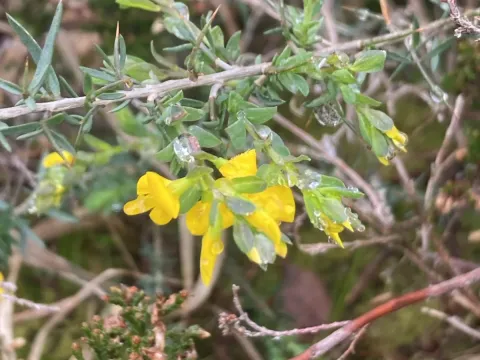
Petty whin
Genista anglica
Petty whin (Genista anglica) is a perennial dwarf shrub belonging to the Fabaceae family. Native to Western and Central Europe, it naturally thrives in heathlands, moors, and open, dry grasslands, demonstrating high adaptability to harsh environments.
What the section contains
Petty whin
To cultivate this species successfully, it is essential to provide well-drained, acidic to neutral soils. It is particularly well-suited for sandy or nutrient-poor substrates, as it has developed natural mechanisms to thrive in low-fertility conditions.
Sunlight requirements are high; the plant requires full sun exposure to maintain its characteristic compact, thorny form. In shaded areas, the plant tends to become leggy and loses its aesthetic and structural value.
From an agrotechnical perspective, moisture control is critical. While the plant is drought-tolerant once established, it cannot withstand waterlogging. Providing excellent drainage is the most important factor in site preparation for this crop.
Beyond its ornamental use, Petty whin is valued for its soil-binding properties. Its root structure helps prevent erosion on steep embankments and sandy slopes, making it a functional choice for land stabilization projects.
The primary threats to Genista anglica are root rot pathogens, which are typically triggered by poor drainage or persistent high soil moisture levels. Prevention involves selecting sites with naturally sandy or stony composition.
Aphids are the most common insect pests encountered during the growing season. They usually target young shoots in late spring; integrated pest management should be used to protect the plant while maintaining local biodiversity.
Powdery mildew can occur in areas with stagnant air. To prevent this, planting density must be carefully managed to ensure sufficient airflow throughout the canopy of the shrub.
The plant is generally resistant to most common garden diseases due to its bitter alkaloids, which act as a natural defense mechanism against many herbivores and pests.
Failure to provide adequate light can also act as a physiological stressor, making the plant more susceptible to opportunistic infections. Monitoring the vitality of the shrubs throughout the growing season is recommended for maintaining healthy populations.