
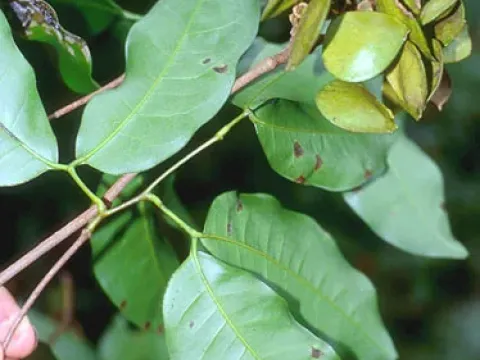
Peltogyne venosa
Peltogyne venosa
Peltogyne venosa is a member of the Fabaceae family, native to the tropical rainforests of South America. This species is highly valued for its slow growth and dense, durable timber.
What the section contains
Peltogyne venosa
The tree thrives in environments with high annual rainfall and consistent tropical temperatures. It requires shade during its early growth stages to simulate the forest understory conditions.
Soil requirements focus on well-draining, nutrient-rich substrates. The tree often forms symbiotic relationships with soil fungi, which are essential for its nutrient uptake in poor tropical soils.
Botanically, it features leathery, compound leaves and a robust growth habit. Its ability to accumulate unique resins within its vascular system contributes to the distinctive properties of its wood.
Cultivation and reforestation efforts are complex due to the species' specific ecological niche, necessitating careful site selection and long-term forest management strategies.
The primary economic use of Peltogyne venosa is the production of high-quality timber, globally recognized in the trade as purpleheart wood due to its distinct color.
Upon exposure to ultraviolet light, the freshly cut brownish wood oxidizes into a rich, deep purple, which is highly sought after for fine woodworking and luxury furniture.
Due to its high density and strength, the timber is frequently used in musical instrument construction, heavy-duty flooring, and high-end artisanal carvings.
Sustainable harvesting of this timber is vital for maintaining the economic value of the forest while preventing over-exploitation of slow-growing forest resources.
Proper seasoning and drying of the wood are critical processes to ensure stability, as the high density can lead to warping if not handled with professional precision.
The population of Peltogyne venosa is threatened by deforestation and habitat fragmentation, which significantly reduce the availability of natural seed sources.
Specific fungal diseases targeting the vascular system can be devastating if the tree is stressed by changes in soil moisture or environmental degradation.
Wood-boring insects present a major threat, particularly in younger trees, as they can compromise the structural integrity and marketability of the wood.
Competition from fast-growing pioneer species often hampers the natural regeneration of this tree in logged or disturbed forest areas.
Strict monitoring and conservation regulations are implemented in many regions to prevent illegal logging and ensure the health of the existing tree stands.