
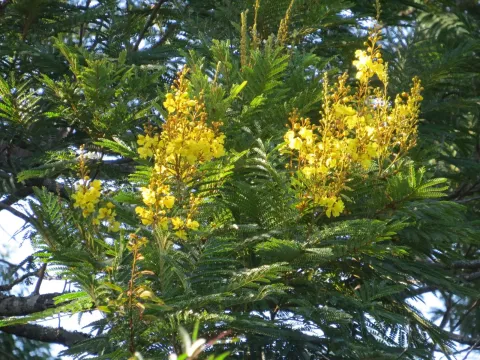
Peltophorum
Peltophorum
Propagation of Peltophorum is primarily achieved through seeds, as cuttings typically exhibit low survival rates. Seeds require mechanical or chemical scarification to break their hard seed coat and promote germination.
What the section contains


Peltophorum
Sowing in tropical regions is best performed at the onset of the rainy season to ensure sufficient moisture for seedling development. In temperate zones, cultivation is conducted in temperature-controlled greenhouses.
Seeds should be sown at a depth of 1–2 centimeters in a nutrient-rich, well-draining substrate. Germination typically occurs within 2 to 4 weeks, provided the temperature remains consistently above +25 degrees Celsius.
Young seedlings require transplanting into individual containers once two sets of true leaves have emerged. Gradually hardening off the plants to direct sunlight is a critical step before permanent field planting.
As a member of the Fabaceae family, Peltophorum benefits from the presence of specific nitrogen-fixing bacteria in the soil, which helps stimulate early establishment and robust growth.
Peltophorum is a heat-loving tree native to the tropical regions of Asia, Africa, and Australia. It demands abundant sunlight to ensure profuse flowering and the development of a dense, spreading canopy.
The tree prefers deep, fertile, and well-drained soils. While it can tolerate short periods of drought, its full growth potential is reached only under conditions of regular, consistent moisture.
In its natural habitat, the tree thrives at temperatures between +22 and +32 degrees Celsius. It is highly sensitive to frost, which can cause significant damage or even lead to the death of the tree crown.
Protecting the tree from strong winds is essential, as young specimens have relatively brittle branches prone to breaking. Soil pH should ideally range from neutral to slightly acidic for optimal nutrient uptake.
The species does not tolerate waterlogging; therefore, on heavy clay soils, installing a robust drainage system prior to planting is mandatory for tree longevity.
The economic utility of Peltophorum is focused on urban landscaping and forestry rather than fruit production. Its timber is valued in carpentry and furniture making for its durability and attractive grain.
In tropical agroforestry, the tree is appreciated for its high biomass production, which is often utilized as green manure. The rapid decomposition of leaf litter helps naturally enrich soil with organic nitrogen.
The bark of certain species contains tannins, which have been historically used in local leather processing. However, commercial exploitation of this resource is generally limited to small-scale operations.
The spectacular flowering phase of Peltophorum, often referred to as the yellow poinciana effect, is a major asset for ecotourism and high-value urban aesthetic projects.
Yield of commercial wood depends on stand density and management; however, the tree is rarely grown as a primary commercial timber crop compared to faster-growing industrial species.
One of the primary threats to Peltophorum is leaf-eating insects, particularly certain lepidopteran larvae. Severe infestations can lead to complete defoliation, significantly stressing the tree.
The root system is susceptible to fungal pathogens when grown in overly wet or poorly drained soils. The first symptoms of infection include wilting foliage and dieback of the terminal branches.
- Powdery mildew: affects young leaves in high humidity with poor air circulation.
- Borer beetles: pose a serious threat to mature trees or those already stressed by drought.
- Leaf rust: manifests as brown spots, which detracts from the plant’s ornamental value.
Managing pests in urban or commercial settings requires the application of systemic insecticides combined with strict adherence to irrigation and drainage protocols.
Disease prevention strategies should include regular sanitary pruning of infected branches and maintaining a clean environment around the base of the tree.