
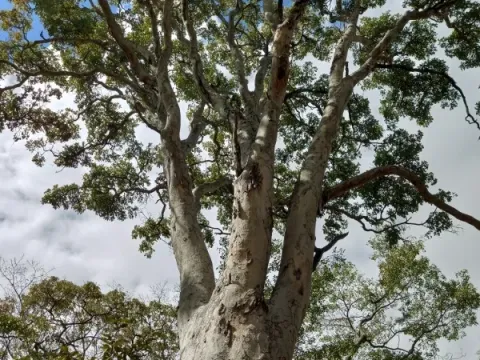
Pericopsis
Pericopsis
Pericopsis, particularly Pericopsis elata, is primarily managed as a forest crop rather than a traditional agricultural field crop. Propagation is generally initiated in nurseries using high-quality seeds collected from mature trees.
What the section contains


Pericopsis
The sowing process begins at the onset of the rainy season to provide sufficient hydration for germination. Using well-aerated, nutrient-rich potting media is essential to ensure a high germination rate and strong seedling development.
Seedlings are nurtured in nursery beds with controlled shading to protect them from excessive sunlight in their early stages. Proper moisture management is critical, as stagnant water can lead to root rot.
Once the seedlings reach a height of approximately 40–50 centimeters, they are ready for transplanting into plantation sites. Careful handling of the root ball is vital to minimize transplant shock.
Field establishment involves clearing surrounding vegetation to reduce competition for nutrients and light. During the first two years, regular maintenance, such as weeding, is necessary for survival.
Pericopsis thrives in moist, tropical environments. It prefers deep, fertile, and well-drained soils, typically loam or clay loam, which provide sufficient minerals and aeration for the root system.
The climate must be consistently warm throughout the year without any threat of frost. High and relatively stable rainfall levels are required to support the tree’s growth cycles.
As a member of the Fabaceae family, Pericopsis possesses the capability to form symbiotic relationships with nitrogen-fixing bacteria, which enhances its growth in various soil types.
Adequate sunlight exposure is essential for mature trees to produce the dense, high-quality timber for which the species is known. Young trees, however, can tolerate partial shade.
Strategic site selection is crucial to avoid areas with waterlogging, which the species does not tolerate. Proper drainage and soil aeration are non-negotiable requirements for successful cultivation.
The yield of Pericopsis is measured by the volume of commercial-grade timber produced over a long growth cycle. As a slow-growing hardwood, it requires patience, with maturity usually reaching 60–80 years.
Managed plantations aim to optimize the growth rate through density control and thinning operations. Early thinning ensures that the healthiest trees receive sufficient nutrients and space to expand.
Timber quality is the primary indicator of a successful harvest. A straight, knot-free trunk provides the highest commercial value, which is influenced by careful pruning in the early years.
Yield estimation takes into account the percentage of merchantable timber per hectare, adjusted for natural environmental factors and the specific management practices implemented on site.
Consistent silvicultural attention, including pest control and monitoring, contributes to maximizing the harvest potential of each plantation unit over its long lifespan.
Pests represent a significant threat to young plantations. Leaf-eating insects and shoot borers can cause stunted growth or mortality if left uncontrolled in the early stages.
Fungal diseases affecting the root system are often associated with poor drainage or excessive humidity. Proactive measures, such as soil analysis and drainage improvement, are recommended.
Mature trees are susceptible to borers that tunnel into the sapwood and heartwood, significantly reducing the timber's quality. Maintaining a healthy stand is the best form of prevention.
Fire risks are substantial in tropical plantations. Establishing firebreaks and maintaining cleanliness in the forest floor can help mitigate the risk of accidental fires destroying the crop.
Conservation efforts are critical as some Pericopsis species face pressure from habitat loss and overexploitation. Sustainable harvesting practices are essential for the future of the species.
Harvesting Pericopsis involves the selective felling of trees that have reached their marketable size. This operation is carried out according to strict forest management guidelines.
Careful planning is required to fell trees without damaging the surrounding young growth or the ecosystem. Modern tools are used to ensure precision during the felling process.
Post-harvest logs undergo initial processing, including debarking and cross-cutting, at the site or a local collection point to prepare the material for transport and kiln drying.
The wood is highly valued in the furniture and construction sectors for its durability, resistance to rot, and attractive appearance, making it a sought-after alternative to traditional teak.
Efficient logistics are necessary to transport the timber to processing facilities without compromising its condition. Proper storage and handling ensure the material maintains its premium quality before market delivery.