
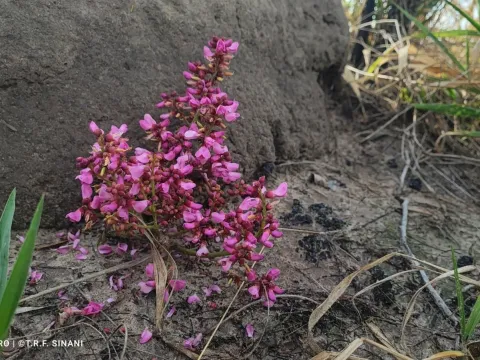
Andira humilis
Andira humilis
Andira humilis is a shrubby plant belonging to the Fabaceae family. It is native to the savanna regions of South America, specifically the Brazilian Cerrado, where it has evolved to thrive in specialized environmental conditions.
What the section contains
Andira humilis
The plant is highly adapted to nutrient-poor, acidic soils that are commonly found in tropical savannas. It possesses a deep root system, which is a key survival strategy against prolonged dry seasons.
Temperature requirements are strictly tropical. Andira humilis cannot tolerate freezing temperatures, making it suitable only for cultivation in warm, frost-free climates where it can receive maximum sunshine.
Soil management for this culture emphasizes excellent drainage. Waterlogging is detrimental to the health of the plant, as it inhibits gas exchange in the roots and encourages fungal diseases.
Propagation is primarily achieved through seeds, which should be sown in prepared substrates that mimic the natural characteristics of savanna soils, emphasizing low fertility and high porosity.
The economic utility of Andira humilis is largely centered on its ethnobotanical applications. The roots and bark are rich in chemical compounds often utilized in local herbal medicine practices.
As a legume, this species holds agricultural value for soil improvement. Its ability to fix atmospheric nitrogen makes it a potential candidate for agroforestry systems aimed at soil regeneration.
Yields are currently dictated by harvesting from natural stands. However, there is ongoing research into domesticating the plant for controlled agricultural production to ensure consistent raw material quality.
Industrial interest focuses on the extraction of active compounds for pharmaceutical applications. Sustainable harvesting practices are essential to maintain the ecological balance of the plant's native range.
Future development will likely involve the optimization of biomass production to satisfy medicinal needs while minimizing the impact on native populations of this resilient shrub.
Fungal infections, particularly those causing foliar spots, are the most common phytosanitary concern. These are typically managed by ensuring adequate spacing and ventilation between plants.
Subterranean pests represent a significant threat to young plants, potentially causing stunted growth or seedling mortality. Monitoring for root-feeding insects is essential in commercial settings.
The plant utilizes natural chemical defenses to deter herbivorous insects. This evolutionary advantage generally results in low pest pressure compared to more fragile domesticated crops.
Pest management should focus on biological control agents. The use of synthetic pesticides is generally discouraged, especially if the plant is intended for medicinal or traditional use.
Maintaining high plant vigor through proper site selection and balanced environmental conditions remains the best defense against both diseases and insect outbreaks in the field.