
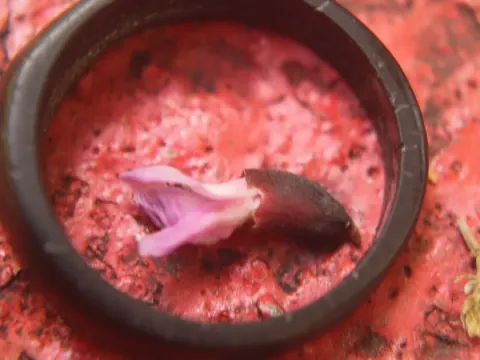
Andira nitida
Andira nitada
Andira nitida is a robust evergreen tree species belonging to the Fabaceae family. This tree is native to tropical environments, where it plays a significant role in local ecosystems due to its structural properties and interaction with soil microbes.
What the section contains
Andira nitida
The cultivation of Andira nitida requires deep, well-drained soils rich in organic matter. It thrives in regions characterized by high temperatures and consistent precipitation, which are fundamental for its continuous growth throughout the year.
Light requirements for this species are significant; mature specimens require full exposure to sunlight to maintain dense foliage and healthy development. Younger plants show adaptation to partial shade, which allows them to establish in the understory before reaching the canopy.
A key biological feature is the plant's ability to engage in nitrogen fixation through symbiotic relationships with soil bacteria. This adaptation enables the tree to colonize sites with lower nutrient availability, contributing significantly to soil enrichment and ecological restoration.
The morphology of Andira nitida includes compound leaves and dense inflorescences, characteristic of the legume family. The tree exhibits slow to moderate growth rates, focusing energy on developing a strong, resilient trunk that is highly prized in its native range.
The economic utilization of Andira nitida is primarily driven by its high-quality timber. Known for its density and extreme durability, the wood is highly sought after for structural applications, heavy-duty construction, and the production of high-end furniture.
Due to its natural resistance to decay and termites, the timber is particularly valued for exterior use, including decking and fencing. Sustainable harvesting practices are essential to ensure the longevity of populations while meeting industrial demands for the wood.
Beyond timber, Andira nitida is gaining attention in the field of agroforestry. Its role in multi-layered farming systems is highly appreciated, as it helps recover degraded lands and improves the growth of neighboring crops by fixing nitrogen into the soil.
Research into the pharmaceutical potential of Andira nitida is ongoing, as some extracts from its bark and seeds have demonstrated biological activity. These studies aim to explore traditional uses and validate them through modern biochemical analysis.
Effective plantation management relies on understanding the seedling requirements and growth dynamics of the tree. By implementing refined silvicultural practices, agricultural producers can optimize the yields and contribute to the conservation of this valuable legume species.