
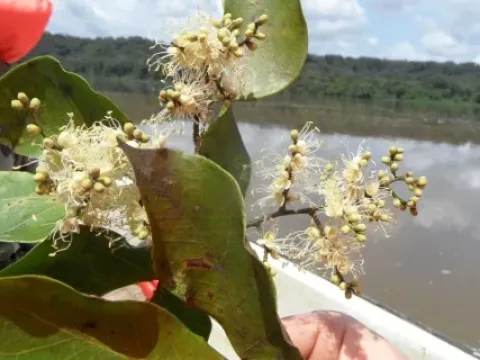
Guibourtia demeusei
Guibourtia demeusei
Guibourtia demeusei is a prominent tree species belonging to the Fabaceae family, native to the tropical rainforests of Central Africa. This species thrives in the humid climates of the Congo Basin, where consistent rainfall and high temperatures support its growth.
What the section contains
Guibourtia demeusei
The tree prefers deep, well-drained soils that provide adequate nutrients without the risk of waterlogging. It occupies specific niches within the forest ecosystem, often found in lowland areas that receive abundant moisture throughout the year.
Botanically, the tree is noted for its high-density timber, which is highly sought after for its decorative grain and structural stability. The leaves are typically compound and leathery, an adaptation that helps the tree manage water loss in a competitive tropical environment.
Growth rates for this species are moderate to slow, requiring stable environments to achieve maturity. The canopy structure is designed to maximize light interception while maintaining resilience against the heavy storms typical of equatorial zones.
In terms of хозяйственного использования, the timber is marketed as Ovangkol or Shedua. It is widely recognized in the fine woodworking industry for its excellent acoustic properties and aesthetic appeal in high-end cabinetry and furniture.
The primary threat to the stability of Guibourtia demeusei populations is commercial logging that exceeds the regeneration capacity of the forest. Unsustainable harvesting practices pose a significant risk to the long-term viability of the species.
Pests, such as stem-boring insects, can undermine the health of individual trees, especially when the forest ecosystem is stressed by environmental changes. These pests represent a recurring challenge for forest managers.
Fungal pathogens associated with decaying organic matter can invade trees that have suffered mechanical damage during logging operations. Such infections often lead to the degradation of the timber quality, rendering it unsuitable for commercial use.
Climatic shifts, including erratic precipitation patterns, can hinder the successful establishment of young seedlings. Competition from faster-growing pioneer species further complicates the natural regeneration process in cleared areas.
To ensure the future of Guibourtia demeusei, silvicultural efforts focus on selective harvesting and reforestation initiatives. Protecting the core habitat is essential to maintaining the biodiversity and the economic future of this valuable timber source.