
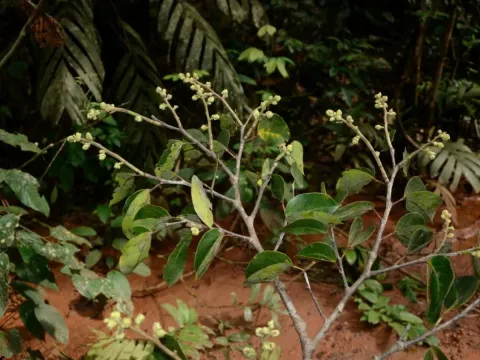
Guibourtia tessmannii
Guibourtia tessmannii
Guibourtia tessmannii belongs to the Fabaceae family and is a significant tropical tree species native to Central and West Africa. It naturally thrives in the humid rainforest biomes, where it requires deep, nutrient-rich soils with excellent drainage to support its robust growth.
What the section contains
Guibourtia tessmannii
The climate requirements for this species are strictly equatorial. It demands constant high temperatures throughout the year and is highly sensitive to frost. Adequate and consistent rainfall is essential for the tree's health, ensuring the necessary humidity for optimal physiological processes.
Botanically, this species is characterized by its slow growth rate, which contributes to the formation of exceptionally dense and heavy timber. The structural integrity of the tree allows it to dominate in the rainforest canopy, competing effectively for sunlight over long periods.
Agricultural management for Guibourtia tessmannii in nursery or plantation settings involves meticulous seedling care. Protecting young plants from direct, harsh sun and ensuring the soil remains moist but not waterlogged are critical steps in early-stage silviculture.
Maintaining soil fertility through organic amendments is vital in plantation forestry. As the tree grows, its requirements for space become more pronounced, necessitating proper spacing to prevent competition and allow for the healthy expansion of the root and crown systems.
The primary economic output of Guibourtia tessmannii is its highly prized timber, commonly marketed as Bubinga. This hardwood is renowned for its strength, durability, and stunning aesthetic appeal, often featuring intricate grain patterns that are highly valued by craftsmen.
Bubinga is extensively utilized in the production of high-end furniture, luxury flooring, and decorative cabinetry. Its resistance to wear and tear makes it an ideal choice for high-traffic areas and premium interior design projects where longevity is a priority.
The yield of high-quality timber is a result of long-term forestry cycles. Despite the lengthy maturation time, the economic value of the harvested material makes it a cornerstone of the sustainable timber industry in its native regions.
Musical instrument manufacturing is another key sector for Bubinga. It is frequently used for bass guitar bodies, harps, and other acoustic instruments, as its physical density provides unique sound resonance and tonal characteristics.
Sustainable harvest practices are essential to ensure the continued yield of this valuable resource. Strict regulations and selective harvesting methods are employed to prevent over-exploitation and promote the long-term health of the forest ecosystems.
The health of Guibourtia tessmannii populations is primarily threatened by fungal pathogens that thrive in the humid forest environment. These infections can compromise the bark and inner wood, leading to structural rot that diminishes the commercial value of the timber.
Insect pests, including various types of wood-boring beetles, pose a significant risk to both young saplings and mature trees. These insects can tunnel into the trunk, creating entry points for secondary diseases and causing systemic stress to the tree.
Anthropogenic pressure remains the greatest overall threat to the species. Illegal logging and the clearing of forest land for agriculture continue to shrink its native habitat, creating a fragmented landscape that hinders natural regeneration.
Climate change, manifesting in altered rainfall patterns and more frequent droughts, impacts the viability of the species. Trees subjected to prolonged water stress become more susceptible to pest attacks and secondary infections.
- Fungal infections leading to internal rot.
- Infestation by wood-boring coleoptera.
- Loss of biodiversity due to deforestation.
- Increased vulnerability due to erratic climate conditions.