
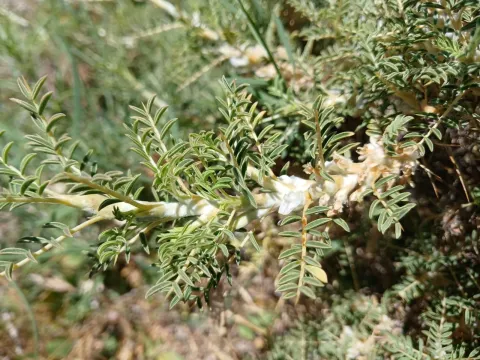
Gum tragacanth shrub
Astragalus gummifer
Astragalus gummifer, commonly known as the gum tragacanth shrub, is a perennial plant belonging to the Fabaceae family. It is native to the mountainous regions of Western Asia and is widely recognized for its economic value as the primary source of tragacanth gum.
What the section contains
Gum tragacanth shrub
The plant is highly adapted to arid and semi-arid climates, thriving in rocky, calcareous, and nutrient-poor soils. It requires full sun exposure and excellent soil drainage, as waterlogging is detrimental to its long-term survival and health.
Agricultural practices for this species are relatively simple due to its hardiness, but it requires careful site selection. It is perfectly suited for marginal lands where traditional row crops cannot grow due to lack of water or poor soil composition.
The botanical structure of the shrub includes a deep, strong taproot that sustains it during severe drought. Growers must ensure that the planting density is sufficient to allow for adequate airflow between plants, which is crucial for preventing humidity-related issues.
Tragacanth gum is obtained through the tapping of the stems, a traditional method that requires precision to ensure the longevity of the plant. The industry relies on high-quality harvests, making sustainable collection techniques a priority for commercial plantations.
Aphids and weevils are the most common pests that affect the gum tragacanth shrub, often targeting new vegetative growth. Integrated pest management strategies are often implemented to mitigate damage during the early growing seasons.
Root rot and powdery mildew are the primary fungal threats, usually associated with improper drainage or excessive atmospheric moisture. Maintenance of soil health and proper spacing significantly reduces the risk of these infections spreading throughout the field.
In certain regions, specialized bugs may feed on the flower buds, negatively impacting the reproductive success of the plant. Frequent scouting of the crop is necessary to detect these infestations before they reach economic threshold levels.
Environmental stressors such as soil erosion on steep slopes can threaten plantation stability. Implementing terracing is a recommended agricultural practice to prevent the loss of topsoil and protect the root systems of the shrubs.
Due to its naturally resilient characteristics, the plant generally maintains a high survival rate under typical field conditions. Chemical intervention is rarely required, which makes it an attractive crop for sustainable agricultural systems.