
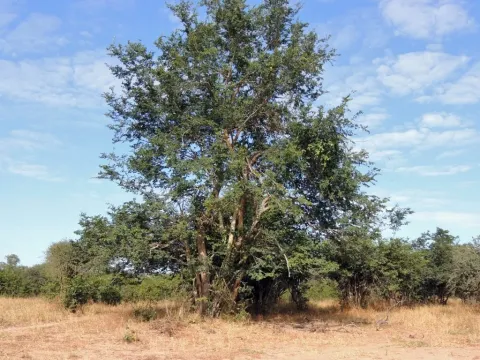
Guibourtia conjugata
Guibourtia conjugata
Guibourtia conjugata is a perennial tree species belonging to the Fabaceae family, specifically the Caesalpinioideae subfamily. It is native to southern Africa, with populations primarily concentrated in Mozambique, Zimbabwe, and parts of South Africa.
What the section contains
Guibourtia conjugata
The tree thrives in sandy, well-drained soil types, which are characteristic of its native savanna and woodland habitats. It is exceptionally well-adapted to high-temperature environments and has developed physiological mechanisms to endure prolonged seasonal dry spells.
Morphologically, the species is identified by its conjugate (paired) leaflets, which contribute to its common name and aid in drought tolerance. It typically grows as a medium-to-large tree, forming a key component of the local forest structure.
Regarding silviculture and management, Guibourtia conjugata requires minimal human intervention when growing in its natural range. However, maintaining forest density and protecting against over-exploitation is essential for the species' long-term viability in local ecosystems.
The primary economic utility of the tree lies in its dense, durable hardwood. This timber is highly sought after for fine woodworking, joinery, and artisanal projects due to its rich texture and inherent resistance to various biological degradation factors.