
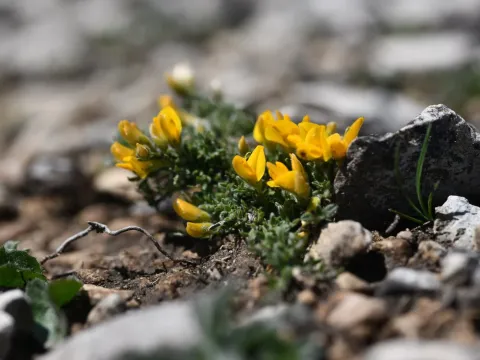
Genista pulchella
Genista pulchella
Genista pulchella, commonly known as a type of broom, is a perennial shrub belonging to the Fabaceae family. This species is valued in ornamental horticulture for its compact habit and vibrant floral displays, making it an excellent choice for rock gardens and xeriscaped borders.
What the section contains
Genista pulchella
Native to the regions of Southern Europe, this plant has evolved to thrive in harsh environmental conditions. It is typically found growing on rocky slopes and dry grasslands, which explains its high tolerance to arid environments and nutrient-poor, sandy soil types.
The cultural requirements for Genista pulchella prioritize full solar exposure. It is an obligate heliophyte, meaning that constant exposure to direct sunlight is essential for the plant to maintain its structural integrity and achieve optimal flower production throughout the season.
Soil management for this species is centered around soil aeration and drainage. The root system is highly sensitive to hypoxia caused by waterlogging; therefore, the substrate must be free-draining and should not contain heavy clay or high amounts of organic matter that retain water for extended periods.
Maintenance involves minimal intervention. During the initial growth stages, plants may require light protection against severe frost, but mature specimens are generally hardy and capable of surviving significant temperature fluctuations common to their native Mediterranean-like habitats.
The most significant threat to the health of Genista pulchella is the development of fungal pathogens, particularly root rot. This condition is almost exclusively the result of improper irrigation practices or poor soil drainage, necessitating careful site selection before planting.
In terms of pest management, the primary concern is the infestation of sucking insects such as aphids. These pests can weaken the plant by feeding on apical buds; control measures usually involve targeted applications of mild pesticides or horticultural soaps when the threshold of infestation is exceeded.