
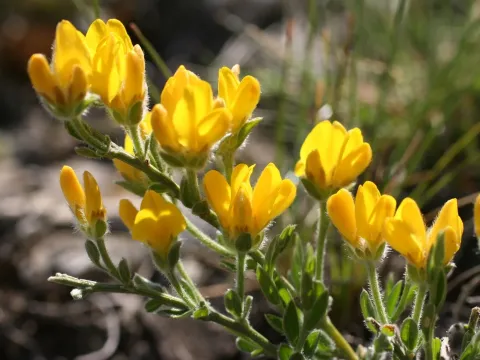
Genista subcapitata
Genista subcapita
Sowing of Genista subcapitata should take place in the spring when the soil temperature consistently reaches 10–12 degrees Celsius. Due to the thick seed coat, scarification is highly recommended to improve germination rates.
What the section contains
Genista subcapitata
The seeds should be planted at a depth of 1–2 cm in well-prepared, loose soil. Maintaining a row spacing of approximately 50 cm is advised to ensure proper air circulation and facilitate mechanical maintenance.
Soil moisture must be kept moderate during the initial germination phase. Overwatering during the first few weeks can result in damping-off disease, which is particularly detrimental to young seedlings.
Direct sowing is preferred as the plant does not respond well to transplanting due to its sensitive root system. Sowing directly in the final location promotes better long-term establishment.
In regions with milder climates, late autumn sowing is an option, as it allows for natural stratification. If chosen, applying a layer of mulch is essential to protect the seeds from frost heaving.
Genista subcapitata belongs to the Fabaceae (legume) family and is a resilient, low-growing shrub. It is specifically adapted to environments that challenge typical crops.
The plant thrives in full sun and requires well-drained, sandy, or rocky soil. Poor drainage is the primary cause of failure, as the root system requires significant oxygen levels.
As a legume, it has the ability to fix atmospheric nitrogen, allowing it to grow successfully in nutrient-poor soils. It is highly drought-tolerant once it has fully established itself.
The species exhibits strong cold resistance, making it suitable for temperate climates with harsh winters. It is also capable of withstanding strong winds and rocky site conditions.
Neutral to slightly acidic soil is ideal. The plant shows sensitivity to highly alkaline soils, which can induce iron chlorosis and inhibit normal physiological development.
The primary agricultural utility of Genista subcapitata lies in its role in phytoremediation and soil stabilization. It prevents erosion on slopes and in degraded land areas.
By contributing nitrogen to the soil, the plant serves as a beneficial partner in crop rotation. It enhances soil structure and fertility, supporting the growth of subsequent crops.
During the blooming season, it acts as an excellent early-season honey plant. It attracts a variety of pollinators, which is crucial for the health of neighboring agricultural ecosystems.
While not a major commercial crop for biomass, its green matter can be used for soil enrichment or as a specialized raw material in the essential oil industry.
In nursery production, the success of the crop is measured by the quality and uniformity of the container-grown plants, which are in demand for sustainable landscaping projects.
Fungal pathogens are the most significant threat to the crop, especially in conditions of poor drainage or high humidity. Root rot is the most common consequence of overwatering.
Powdery mildew can infect the foliage during humid seasons. This necessitates careful spacing and the implementation of airflow management techniques to minimize infection risk.
Pests such as aphids and spider mites can attack during dry spells. These pests weaken the plant by sucking sap from young shoots, often leading to secondary infections.
Excessive nitrogen fertilizer use makes the plant more susceptible to pest damage by inducing succulent growth. A balanced fertilization program is essential for maintaining natural resistance.
Integrated pest management, involving the use of beneficial insects and natural fungicides, is the most sustainable way to protect the crop throughout the growing season.
The harvesting of plant material for specialized use is typically conducted during the peak flowering stage. This is the period when the concentration of essential metabolites is at its highest.
Pruning should be done carefully, using sharp shears to avoid damaging the woody stems. This ensures that the plant retains enough energy to recover and produce new growth in the following season.
Drying the harvested material should occur in a shaded, well-ventilated area. Rapid drying out of direct sunlight is necessary to preserve the volatile oils and the vivid color of the flowers.
The dried product must be stored in airtight containers in a cool, dark environment to prevent degradation. Proper storage allows the material to remain effective for up to two years.
For ornamental or floral use, harvesting should be selective, leaving at least 70% of the plant intact to ensure it can continue to provide ecological benefits and structural support.