
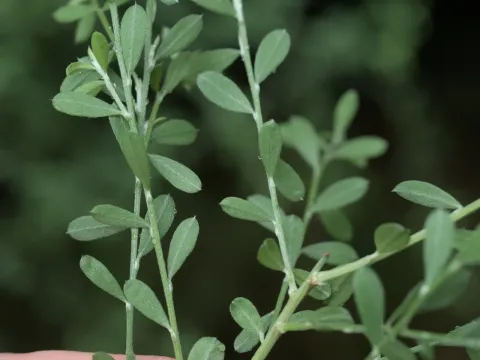
Genista tenera
Genista tenera
Genista tenera, commonly known as the Madeira broom, is a perennial shrub belonging to the Fabaceae family. This species is native to the island of Madeira, where it grows in mountainous and rocky environments, demonstrating high resilience.
What the section contains
Genista tenera
The plant is characterized by its slender, flexible stems and profuse yellow flowering. It belongs to a group of drought-tolerant plants that are well-adapted to surviving on low-nutrient, volcanic, or stony soils.
Regarding climate requirements, Genista tenera favors mild, sunny environments. It requires full sun exposure to maintain its compact shape and to ensure the development of a large number of golden-yellow flowers during the season.
The soil must have excellent drainage properties. In agricultural or gardening settings, it is essential to avoid heavy, clay-rich soils that retain moisture for too long, as the roots are sensitive to waterlogging, which often leads to root death.
Regular maintenance involves light pruning once the plant has finished flowering. This helps to maintain the shrub's architecture and encourages vigorous growth for the next season while ensuring the plant does not become too woody or unruly.
Root rot is the most significant threat to Genista tenera, caused primarily by fungal pathogens like Phytophthora in overly saturated soil. Proper drainage management is the most effective prevention strategy against this issue.
Pests such as aphids are frequently observed on the young, tender growth during the spring. These insects feed on plant sap and can weaken the shrub if they are not controlled at the early stages of infestation.
Spider mites are another concern, particularly in hot and dry climates. They cause stippling on the leaves, leading to chlorosis and potential leaf drop if the plant is under high drought stress during the summer months.
Powdery mildew can affect the foliage if the plants are situated in areas with poor air circulation. To minimize this risk, it is recommended to plant the shrubs with adequate spacing to allow for consistent drying of the leaves.
For chemical control, use specific systemic insecticides for pest management and copper-based fungicides for early symptoms of fungal growth. Maintaining plant health through proper fertilization is vital to help the shrub recover from pest attacks.