
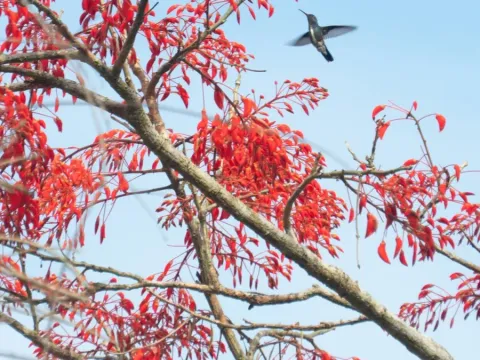
Erythrina verna
Erythrina verna
Erythrina verna, commonly known as a type of coral tree, is a member of the Fabaceae family. This tree is characterized by its deciduous nature and striking red flowers that emerge typically before the foliage.
What the section contains
Erythrina verna
Native to South America, particularly Brazil, this species thrives in tropical and subtropical regions. It requires significant solar exposure and prefers fertile, well-draining soil types to maintain healthy growth.
Climate requirements include warm temperatures throughout the year. While the plant is somewhat drought-tolerant once established, it requires consistent moisture during the early establishment phase to develop a deep root system.
Agrotechnical practices involve pruning to control the tree's height and shape, as well as regular soil enrichment with organic matter to support the leguminous nitrogen-fixing processes.
The tree serves several хозяйственные (economic) roles, including ornamental landscaping, shade provision in agricultural settings, and as a valuable nectar source for pollinators in its native ecosystem.
One of the primary threats to Erythrina verna is root rot caused by poor soil drainage, which creates an anaerobic environment unfavorable for the plant's health.
Pests such as aphids and scale insects commonly infest the tender shoots and foliage, especially in greenhouse conditions or areas with high humidity levels.
Fungal infections of the bark can occur if the tree sustains physical damage, necessitating careful handling during maintenance and trimming operations.
Leaf spot diseases can significantly impact photosynthesis, which is often triggered by sudden changes in humidity and temperature during the growing season.
Preventive strategies involve maintaining proper spacing between trees to ensure adequate airflow and monitoring for signs of infestation to intervene early with appropriate biological controls.