
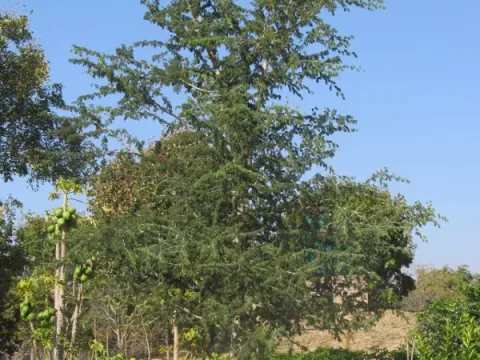
Faidherbia
Faidherbia
Faidherbia (Faidherbia albida) is a significant nitrogen-fixing tree species belonging to the Fabaceae family. It is renowned for its reverse leaf phenology, where it sheds its foliage during the rainy season and retains it during the dry season, providing unique advantages to farming.
What the section contains

Faidherbia
This tree is highly adaptable to various climatic zones, primarily in sub-Saharan Africa. Its deep taproot system allows it to access groundwater, making it extremely drought-resistant and capable of flourishing in arid environments where other vegetation struggles.
The cultural and economic importance of Faidherbia lies in its ability to improve soil fertility through litterfall. As the tree sheds its leaves at the beginning of the cropping season, it acts as a natural green fertilizer, releasing essential nutrients into the topsoil.
For successful growth, Faidherbia requires deep, well-drained soils, ideally of alluvial origin. It is highly photophilous and requires full sun exposure; therefore, it is often planted in wide spacing arrangements within agroforestry systems to prevent competition with crops.
Beyond soil enrichment, it serves as a critical source of high-protein fodder for livestock during the dry season. The pods and leaves remain green and nutritious when grass is scarce, supporting pastoral communities and intensive livestock systems alike.
One of the primary threats to Faidherbia seeds is the bruchid beetle, which can infest stored seeds and destroy their viability. Proper post-harvest treatment, such as heat treatment or specialized chemical storage, is necessary to protect the seed bank.
Seedlings are highly susceptible to browsing by goats, sheep, and other livestock. Successful reforestation efforts require protective enclosures until the young trees reach a height where they are no longer accessible to browsing animals.
In nurseries, high humidity can lead to fungal issues such as powdery mildew or damping-off disease. Ensuring proper aeration and preventing waterlogging are essential management practices to keep nursery stock healthy and vigorous.
While the tree is hardy, infestation by various scale insects and sap-sucking pests can occur. These usually cause minor damage to adult trees but can lead to stunted growth in young saplings if not monitored periodically.
Root rot caused by fungal pathogens is primarily a result of poor soil drainage. Planting in waterlogged or heavy clay soils should be avoided to prevent the decline of the root system, which is critical for the tree's survival during drought periods.