
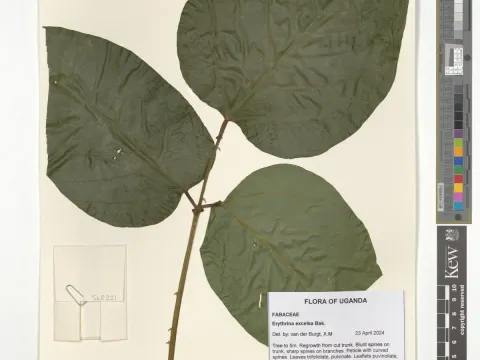
Erythrina excelsa
Erythrina excelsa
Erythrina excelsa is a prominent tree species belonging to the Fabaceae family, native to tropical African rainforests. Known for its stature and ecological versatility, it plays a significant role in nitrogen fixation, which contributes to the nutrient cycling of tropical ecosystems.
What the section contains
Erythrina excelsa
The climatic needs of this species are strict, as it thrives in humid, frost-free environments with high annual temperatures. The tree requires ample sunlight and consistent atmospheric moisture to reach its full potential, making it unsuitable for cooler or arid regions without irrigation.
Optimal soil conditions include deep, well-draining loams that provide stability for the tree's extensive root system. While it can adapt to various tropical soil types, it performs best in soils with high organic content where moisture levels are maintained without the risk of waterlogging.
Agronomic management of Erythrina excelsa involves proper sapling spacing to ensure maximum growth and canopy development. Regular weeding and, in early stages, supplemental watering are essential to ensure the tree establishes itself successfully before reaching maturity.
The tree's economic value lies in its use as a shade provider for cocoa and coffee plantations and its utility in agroforestry. The timber, while soft, is utilized in local woodworking and for producing lightweight crafts, highlighting its multifaceted role in rural economies.
Common threats to Erythrina excelsa include infestation by various borers and defoliating insects that can significantly reduce the vitality of young stands. Integrated pest management strategies are often necessary to maintain the health of plantations.
Pathogenic fungi represent a primary risk, particularly in high-humidity areas where air circulation is restricted. Managing soil drainage and implementing appropriate spacing between individual trees are critical practices to mitigate the risk of fungal outbreaks.