
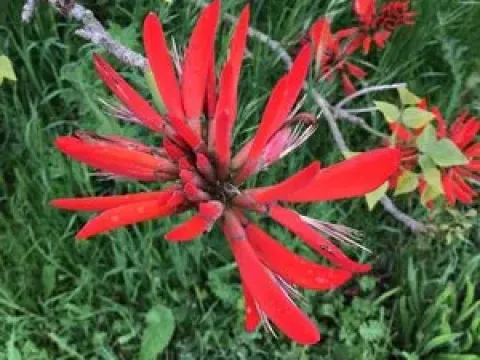
Erythrina burttii
Erythrina burttii
Erythrina burttii belongs to the Fabaceae family. This tree species is endemic to East Africa, primarily found in the semi-arid regions of Tanzania and Kenya.
What the section contains
Erythrina burttii
The culture is highly drought-tolerant and well-adapted to environments with significant seasonal moisture deficits. It thrives in well-drained rocky or loamy soils with neutral to slightly alkaline pH levels.
For optimal development, the tree requires intense sunlight exposure. It is extremely sensitive to waterlogging in the root zone, making it essential to avoid low-lying areas or sites with high water tables during plantation.
In its natural habitat, the species withstands moderate temperature fluctuations; however, it is highly sensitive to freezing temperatures, which can damage young shoots and inhibit growth.
Agricultural practices for this species include weeding during the initial years of development and protecting young specimens from livestock grazing, which frequently damages the bark and tender branches.
The primary threats to Erythrina burttii include insect pests, particularly weevils, whose larvae are known to damage the wood and seeds of the tree.
Under conditions of high humidity or poor crown ventilation, the tree is susceptible to fungal infections that manifest as leaf spots or severe root rot.
In its natural range, herbivorous megafauna, especially elephants, pose a significant threat by stripping bark and breaking branches, which can eventually lead to the death of the tree.
Improper cultivation practices, such as excessive soil moisture, create a favorable environment for pathogens that attack the root system, weakening the overall structure.
Recommended management practices include maintaining adequate spacing between trees to ensure airflow, regular monitoring of the bark, and immediate intervention upon detecting signs of infestation.