
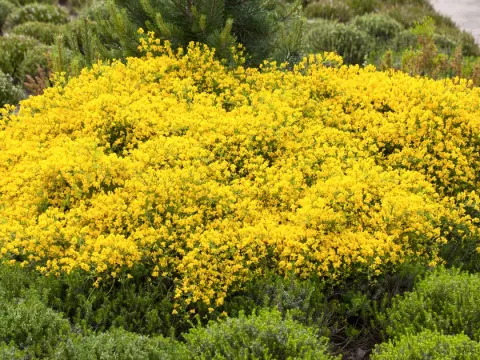
Bean's broom
Cytisus beanii
Bean's broom, scientifically known as Cytisus beanii, is a deciduous shrub that belongs to the Fabaceae family. This hybrid, resulting from the cross between Cytisus purgans and Cytisus ardoinii, is highly regarded for its low-growing habit and golden blooms.
What the section contains
Bean's broom
Botanically, it is characterized by thin, flexible green stems that form a dense, low mound, typically reaching a height of 40 to 60 centimeters. Its primary ornamental value lies in its mass flowering period during late spring and early summer.
Regarding climate and site requirements, this culture demands full sun exposure. It thrives in well-ventilated locations and will perform poorly in shady spots, where the stems tend to become sparse and lose their natural compact shape.
The soil requirements are strict: the plant needs sandy or gravelly soil with excellent drainage. It is not suitable for heavy clay soils that retain moisture, as the root system is highly susceptible to rot under anaerobic conditions.
Agrotechnical maintenance involves light pruning immediately after the flowering stage to encourage new, vigorous growth for the following season. Being drought-tolerant once established, it requires minimal supplemental watering compared to other decorative shrubs.
The main disease threat for Bean's broom is powdery mildew, which manifests as a white, powdery coating on the leaves. This usually occurs when the plant is sited in an area with poor airflow or high humidity.
Leaf spot diseases can also affect the foliage, causing discoloration and premature leaf drop. Proper spacing between individual plants is crucial to minimize the risk of infection spreading through the garden.
Pest issues include aphids, which often colonize the tender tips of the branches. Regular inspection during the spring flush is necessary to catch and treat infestations early with mild soaps or systemic pesticides.
Caterpillars, specifically those of the broom moth, can feed on the foliage and significantly reduce the aesthetic value of the shrub if not managed through timely intervention.
Overall plant health is highly dependent on avoiding waterlogged soil. Ensuring a well-drained planting site is the best preventative strategy against root pathogens and fungal issues that plague the species.