
Bauhinia tarapotensis
Bauhinia tarapotensis
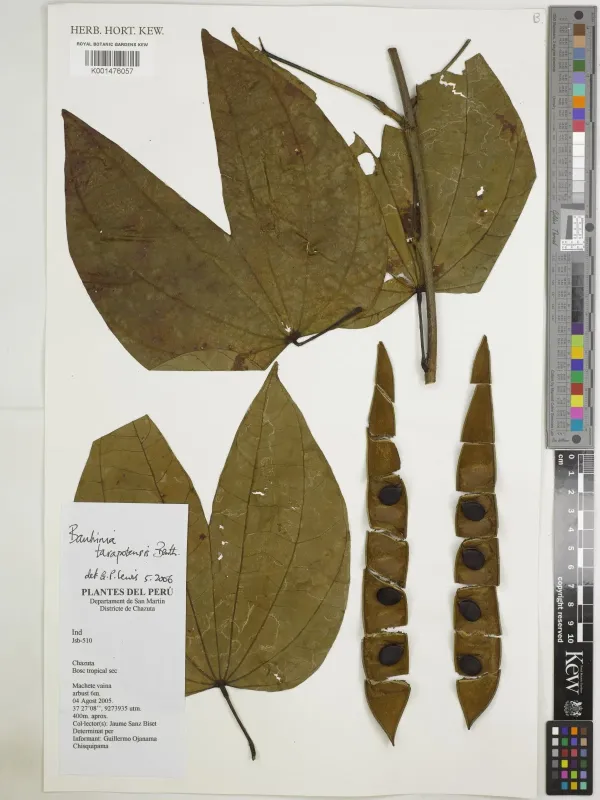
Description
Growing requirements
Bauhinia tarapotensis is a distinct species belonging to the Fabaceae (legume) family. Native to the tropical regions of South America, specifically the Amazonian basin, this tree is well-adapted to warm, humid environments where it plays a role in local forest ecology.
The plant thrives in well-drained, nutrient-rich soils with a neutral or slightly acidic pH. It requires consistent moisture levels during its initial growth phases and prefers areas with minimal seasonal temperature variation to reach its full development potential.
Botanically, the plant is characterized by its unique bifoliate leaves. It grows as a medium-sized tree, providing significant biological value through its ability to fix atmospheric nitrogen, which improves soil fertility in its immediate surroundings.
Agricultural management of Bauhinia tarapotensis focuses on canopy maintenance and soil health. Because it is sensitive to waterlogged conditions, irrigation must be carefully controlled to prevent root decay, especially in clay-heavy substrates.
This species is increasingly recognized for its utility in agroforestry systems. By integrating this tree into farming plots, producers can benefit from natural soil enrichment and long-term land restoration, making it a sustainable choice for tropical land management.
Main diseases and pests
The primary threats to Bauhinia tarapotensis involve fungal pathogens, particularly root rot, which is triggered by excessive soil moisture and poor drainage. Ensuring high soil aeration is the most effective preventative measure against these diseases.
Common pests include leaf-eating insects and sap-sucking aphids that target new, tender growth. Maintaining a clean orchard environment and encouraging beneficial predator populations helps mitigate these infestations without relying solely on chemical pesticides.