
Beach bean
Canavalia maritima
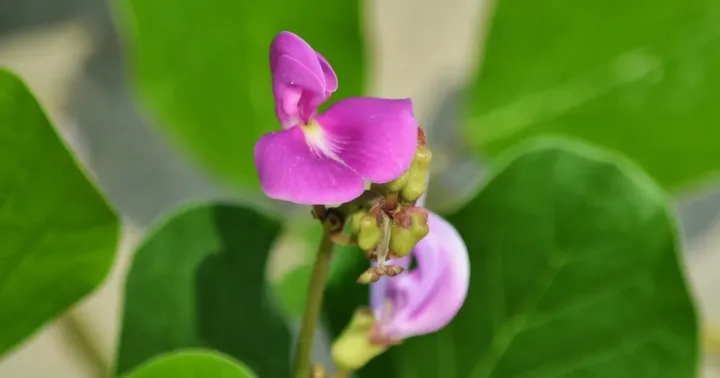
Description
Sowing dates
Beach bean is a tropical perennial plant typically sown in frost-free regions. The ideal time for sowing is at the beginning of the rainy season when the soil is sufficiently warm and moist to support rapid germination.
Seeds possess a high germination energy but are protected by a hard coat, so scarification is often used to improve emergence rates. The planting depth is usually 3–5 cm, ensuring the seeds remain in contact with consistent soil moisture.
In its natural habitat, the plant propagates via self-seeding, with pods floating in seawater to colonize new areas. In agricultural settings, sowing is done in rows, providing enough space for the vines to spread and cover the ground effectively.
The crop shows vigorous early growth, allowing it to cover the assigned area quickly. This rapid development makes it an excellent candidate for establishing ground cover on degraded or newly cleared land.
When grown in nurseries or plantations, it is essential to provide irrigation in the weeks following sowing until the root system is robust enough to reach deeper, more stable moisture horizons.
Growing requirements
Canavalia maritima belongs to the Fabaceae family and is a trailing herbaceous plant with a deep taproot system. It is perfectly adapted to coastal conditions, capable of withstanding intense sunlight and high temperatures.
The plant thrives in sandy, loose soils with low nutrient content, where other crops struggle to survive. It shows exceptional tolerance to saline soils, making it highly valuable for land reclamation and coastal dune stabilization.
Growth requires air temperatures between 20 and 30 degrees Celsius. The crop is extremely sensitive to freezing temperatures, which restricts its agricultural cultivation to tropical and subtropical climate zones.
Water requirements are moderate: once established, the plant becomes drought-tolerant. However, for maximum biomass production, adequate rainfall or regular irrigation is necessary during dry spells.
Full sunlight is a critical requirement, as the plant does not tolerate shade. In the initial stages of cultivation, weed control is necessary to ensure the plants can establish without competition.
Yield
The green biomass yield of Beach bean depends on soil quality and water availability, achieving significant volumes under proper management. The primary agricultural product is the biomass, which is utilized as a green manure.
The plant is highly efficient at fixing atmospheric nitrogen, significantly improving soil fertility in areas where it is cultivated. This trait makes it an indispensable tool for restoring degraded agricultural land.
Seed production is also substantial, allowing farmers to maintain a supply of planting material. Pods contain multiple seeds that mature gradually, requiring selective harvesting to prevent losses.
When used as a ground cover, biomass yields can reach 20–30 tons per hectare. Regular pruning of the vines stimulates further growth and increases the overall biomass production over the growing season.
Yield stability is dependent on the activity of pollinators. In regions with healthy insect populations, seed harvest levels remain consistent for several years.
Main diseases and pests
Beach bean possesses a strong natural immunity to many diseases due to the presence of alkaloids and other protective compounds. It is rarely affected by fungal diseases, provided that waterlogging is avoided.
The main threats to young seedlings are soil-dwelling pests, such as grubs or nematodes, which can damage the root system. Maintaining organic matter in the soil helps mitigate these risks.
Leaf-eating insects may occasionally cause damage, but the plant exhibits high regenerative capacity. Typically, natural predators effectively control pest populations without the need for chemical pesticides.
Viral diseases occur very rarely and generally do not cause significant economic losses. Prevention is based on using healthy seeds and adhering to basic crop rotation principles.
To protect the plantations, periodic field inspections are recommended. Early identification and removal of severely affected plants help prevent the spread of any potential infections across the field.
Harvesting
Green biomass harvesting is performed by mowing or shredding the stems when the plant reaches the full flowering stage. This is considered the optimal time for use as green manure due to high nitrogen levels.
Seed harvesting is conducted manually as the pods darken and dry out on the vines. It is important to harvest before the pods dry completely in the sun, as they may shatter, leading to seed loss in the field.
After collection, seeds must be dried in a shaded, well-ventilated area to prevent mold growth. Storage should be in a dry, cool place, protected from rodents and excess humidity.
When used as a ground cover, harvesting may not be required at all, as the vines are left to decompose naturally. This practice protects the soil from erosion and returns nutrients directly to the topsoil layer.
For livestock feed, green biomass is harvested before the stems become woody. Timely cutting ensures higher nutritional value and better digestibility for domestic animals.