
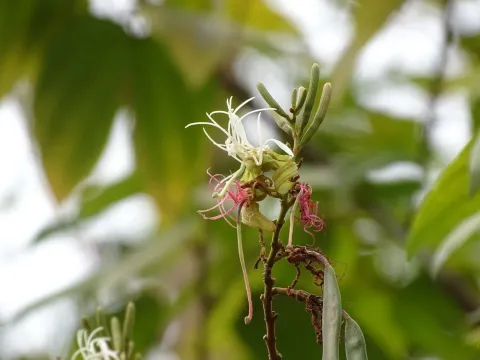
Bauhinia ungulata
Bauhinia ungulata
Propagation of Bauhinia ungulata by seeds requires pre-sowing scarification to significantly improve germination rates. The best time for sowing is during the spring season when weather conditions remain consistently warm.
What the section contains
Bauhinia ungulata
Growers should use a light, well-draining soil mix rich in organic matter. Seeds are typically planted at a depth of 1 to 2 centimeters, ensuring sufficient moisture levels and protection from dehydration.
In nursery settings, keeping the germination temperature between 25 and 28 degrees Celsius is recommended. Seedlings usually emerge within 2 to 4 weeks, demanding bright, indirect light immediately after sprouting.
Transplanting into the field is carried out once the risk of frost has passed and the saplings are at least 20-30 centimeters tall. Maintaining the root ball's integrity is vital to reduce transplant stress.
The culture exhibits a moderate growth rate initially, requiring regular irrigation during the first year of establishment. Once matured, it becomes quite drought-tolerant and resilient to environmental fluctuations.
Bauhinia ungulata, a member of the Fabaceae (legume) family, is a sun-loving tropical plant. For optimal development and flowering, it requires exposure to full sun throughout the growing season.
The plant prefers loose, deep soils with a neutral to slightly acidic pH. Waterlogging is detrimental to the species, so installing a proper drainage system is necessary if the soil has high clay content.
Climatically, it is a tropical species that is highly sensitive to freezing temperatures. It thrives in regions where the average annual temperature stays above 20 degrees Celsius and wind exposure is minimal.
During dry seasons, the plant may shed some foliage to conserve water. Supplementing irrigation during these periods can significantly enhance the tree's health and visual appeal.
To support plant health, applying balanced mineral fertilizers with low nitrogen content during active growth is recommended. This promotes robust root development and consistent bloom production.
The economic use of Bauhinia ungulata is primarily centered on ornamental landscaping and ecological restoration. It serves as a valuable nectar source for pollinators, supporting the biodiversity of agricultural areas.
Its timber possesses moderate hardness, allowing for the creation of small-scale carpentry and crafts. However, large-scale industrial timber production is restricted due to the tree's slow biomass accumulation.
Foliage and fruits are sometimes used in traditional medicine for their bioactive compounds, which are reported to possess anti-inflammatory properties. Use as forage is minor but possible in agroforestry systems.
The species enriches soil fertility by fixing nitrogen through symbiotic nodule bacteria on its roots. This makes it a promising plant for rehabilitating degraded tropical lands.
Seed production in plantations is limited, yet it remains a key resource for nurseries supplying saplings for urban reforestation and environmental shielding projects.
Bauhinia ungulata shows good resistance to most pathogens, though high humidity can trigger fungal infections. Common issues include powdery mildew and various types of leaf rust.
Pests like spider mites and scale insects may attack young shoots in closed environments. Management involves the use of systemic insecticides and regular pruning of infected plant parts.
Root system damage often stems from over-irrigation, leading to root rot. Preventive care focuses on maintaining a strict watering schedule and utilizing porous growing media.
Leaf-eating caterpillars may impact the tree's ornamental value if left unchecked. Frequent monitoring of the canopy allows for early detection and mitigation of pest outbreaks.
- Prevention: maintaining proper plant spacing.
- Prevention: careful monitoring of root zone moisture.
- Treatment: use of broad-spectrum fungicides.
- Treatment: biological control agents for pest management.