
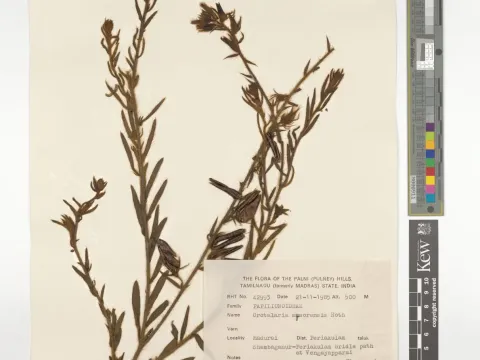
Crotalaria mysorensis
Crotalaria mysorensis
Crotalaria mysorensis is a thermophilic annual plant, making its sowing schedule dependent on the arrival of consistently warm weather. Seeds should be sown once soil temperatures have reached at least 18-20 degrees Celsius.
What the section contains
Crotalaria mysorensis
In temperate regions, late spring or early summer is considered the optimal time for planting. It is crucial to avoid any risk of frost, as seedlings are highly sensitive to low temperatures and can be destroyed by even minor cold snaps.
Seeding rates are determined by the intended use of the crop. When cultivated specifically for green manure or biomass production, row planting with spacing of approximately 20–30 centimeters is standard practice.
The seeds possess high germination energy, provided that soil moisture levels are adequate. Planting depth should be shallow, usually not exceeding 2–3 centimeters, to ensure uniform and rapid emergence.
After sowing, rolling the soil surface is recommended to improve the contact between the seeds and the soil particles. Under favorable moisture conditions, initial shoots typically appear within 7–10 days post-planting.
As a member of the Fabaceae family, this crop demonstrates strong adaptability to various tropical and subtropical soil types. It thrives in well-drained loams or sandy soils, while it does not tolerate waterlogged conditions.
Crotalaria mysorensis requires full sun exposure to flourish. Excessive shading should be avoided, as it leads to etiolated stems and a significant reduction in the overall biological productivity of the biomass.
The crop shows high drought resistance after the active root establishment phase, but it requires regular irrigation during the early growth stages. Optimal growth rates occur at temperatures ranging from 25 to 30 degrees Celsius.
Soil pH should ideally be neutral or slightly acidic. On excessively saline or highly alkaline soils, the development of the root system and its symbiotic nitrogen-fixing bacteria is significantly impaired.
This plant is highly valued for its ability to enhance soil physical properties. Its deep-penetrating root system helps to loosen compacted soil layers and contributes to an increase in soil organic matter following residue decomposition.
Like many species within its genus, Crotalaria mysorensis contains alkaloids, which act as a natural defense mechanism against several common leaf-eating pests. However, it remains susceptible to a specific complex of parasites.
Primary pests include certain species of cutworm larvae, which may damage tender foliage during the early stages of plant development. Aphid infestations also occur periodically, which may further act as vectors for various viral diseases.
Fungal infections, particularly root rots, can arise under conditions of systematic waterlogging or poor field drainage. Strict adherence to irrigation schedules and crop rotation protocols is necessary to manage these risks.
Wilt diseases caused by fungi of the genus Fusarium represent a significant threat to Crotalaria stands. If early signs of wilting are observed, irrigation must be restricted, and infected plants should be promptly removed.
Proactive management includes the use of high-quality, treated seed stock and maintaining an optimal plant density to ensure adequate airflow within the crop canopy, thereby preventing the buildup of fungal pathogens.