
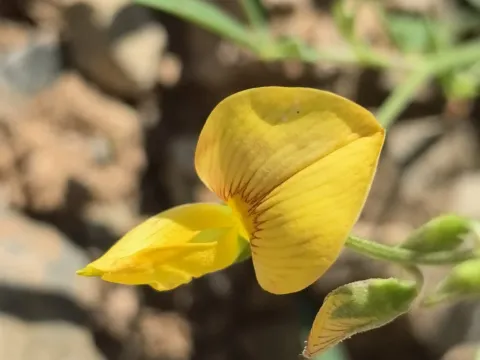
Crotalaria pumila
Crotalaria pumila
Crotalaria pumila belongs to the Fabaceae family. It is a low-growing herbaceous legume recognized for its ability to restore soil health in diverse ecosystems.
What the section contains
Crotalaria pumila
Originating from the Americas, this species has adapted to tropical and subtropical climates, making it an excellent candidate for agricultural rehabilitation programs.
Botanically, it features pinnate leaves and distinctive yellow flowers. Its structure allows it to function effectively as a dense ground cover that prevents erosion.
The primary use of this crop is green manure. It produces significant biomass that, when incorporated into the soil, provides essential nutrients and organic matter.
Furthermore, its roots interact with specific rhizobia, significantly enhancing soil nitrogen content and improving the yields of subsequent crops in the rotation.
The plant thrives in well-drained soils. Sandy and loamy soils are ideal, as they allow the root system to penetrate deep and provide necessary oxygenation.
Thermal requirements are specific; Crotalaria pumila is highly sensitive to cold. Optimal growth occurs in temperatures ranging from 25 to 35 degrees Celsius.
Full solar radiation is necessary for vigorous growth. The plant does not tolerate shady environments, which can lead to stunted growth and reduced nitrogen fixation.
Irrigation management is vital during the germination phase. Once established, the plant exhibits remarkable drought tolerance, surviving long dry periods with ease.
Nutrient management focuses on moderate phosphorus and potassium levels. Nitrogen fertilizers should be avoided to promote natural nodulation and symbiosis.
Pest pressure is usually manageable, but pod-borers can affect seed production if the crop is left to reach full maturity instead of being turned under.
Fungal diseases like root rot are common in poorly drained fields. Ensuring proper drainage is the most effective preventive measure against these pathogens.
Aphids can cause damage during the seedling stage. Regular scouting of the field is recommended to prevent infestation peaks during the early growth phase.
Managing weeds is critical during the first month. Once the crop establishes its canopy, it is highly effective at suppressing most competing weeds autonomously.
Adhering to a strict crop rotation schedule minimizes the buildup of soil-borne pathogens and ensures the long-term viability of the field for future cycles.