
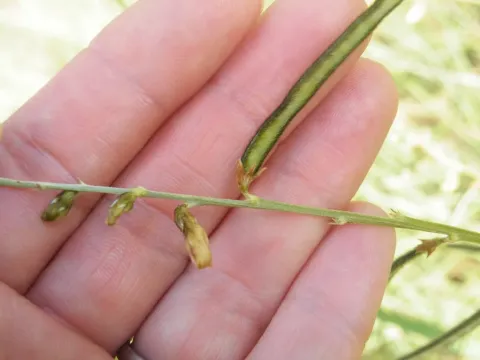
Crotalaria orientalis
Crotalaria orientalis
Crotalaria orientalis is a robust member of the Fabaceae family, widely recognized for its soil-improving properties. Sowing typically occurs in the spring once the soil temperature consistently reaches 12-15 degrees Celsius.
What the section contains
Crotalaria orientalis
The ideal planting window is late April to early May, ensuring the risk of late frosts is passed. Proper seedbed preparation is crucial for uniform germination.
Seeding rates are adjusted based on the objective, whether the primary goal is biomass production or seed multiplication. Higher densities are preferred for weed suppression.
Scarifying the seeds prior to sowing is a common practice to breach the hard seed coat, thereby increasing germination rates and ensuring a uniform crop stand.
Seeds should be sown at a depth of 2 to 4 centimeters, depending on soil moisture content and texture, to provide optimal conditions for emergence.
This crop thrives in sunny, well-lit environments and shows remarkable resilience to heat and dry spells, making it adaptable to various semi-arid climates.
While tolerant of diverse soil types, Crotalaria orientalis performs best in well-drained sandy or light loamy soils with a neutral pH balance.
Avoid planting in areas prone to waterlogging, as the species is highly sensitive to root asphyxiation, which can lead to fungal issues and stunted growth.
As a nitrogen-fixing legume, it excels in low-fertility soils, symbiotically extracting nitrogen from the atmosphere and enriching the ground for subsequent crops.
Optimal vegetative growth is achieved within a temperature range of 20 to 28 degrees Celsius, though it remains productive even in hotter conditions.
The primary agricultural utility of Crotalaria orientalis is as a green manure crop, which significantly boosts organic matter content and soil structural integrity.
Yields of fresh biomass can reach 200–400 quintals per hectare, providing a massive influx of nutrients and carbon to the soil surface upon decomposition.
The deep-reaching root architecture helps break up compacted soil layers, enhancing water infiltration and aeration deep within the soil profile.
Integrating this crop into rotation cycles effectively reduces the dependence on synthetic nitrogen fertilizers, making it a staple of organic and sustainable farming.
Fast biomass turnover ensures that nutrients become available to subsequent crops relatively quickly, leading to improved overall farm productivity.
Crotalaria orientalis generally displays good resistance to pests, but poor site management can lead to the development of several common agricultural threats.
Fungal pathogens such as Fusarium wilt and various root rot types are the most significant risks, particularly under conditions of high humidity or poor drainage.
Insect pests, including weevils, may occasionally target foliage, necessitating periodic field monitoring and integrated pest management strategies.
Mitigation of these threats is best achieved through crop rotation, preventing the buildup of host-specific diseases by avoiding successive legume cropping.
- Monitor fields for signs of wilting or discoloration
- Maintain proper drainage to prevent root infections
- Use certified, high-quality seeds for planting
For green manure purposes, harvest takes place during the mass flowering phase, as this is when the plant biomass and nitrogen content are at their maximum.
The biomass is typically chopped and incorporated into the topsoil via disking, allowing it to mineralize and provide nutrients to the upcoming planting cycle.
When harvested for seeds, the plants should be cut after the pods reach full maturity but before significant natural shattering occurs.
Post-harvest handling involves drying the seeds to a moisture level of approximately 12-14 percent to ensure longevity and prevent mold growth during storage.
Efficient harvesting techniques are essential to maintain seed viability and ensure the sustainable availability of this beneficial crop for future use.