
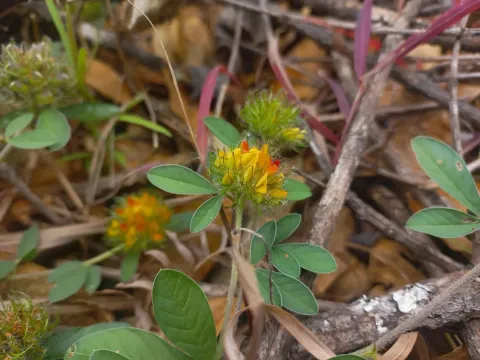
Crotalaria ononoides
Crotalaria ononoides
Crotalaria ononoides is a significant herbaceous legume belonging to the Fabaceae family. Native to tropical regions, primarily in Africa, this species is increasingly recognized for its contribution to soil health and sustainability.
What the section contains
Crotalaria ononoides
The plant is biologically characterized by its ability to form deep root systems and establish strong symbiotic relationships with nitrogen-fixing bacteria. This feature is particularly beneficial in agricultural systems facing low soil fertility.
Botanically, it features pinnately structured leaves and characteristic terminal racemes with flowers typical of the genus. Its growth habit is primarily erect, allowing for efficient production of green biomass in short periods.
Agricultural use of Crotalaria ononoides is focused on green manuring and soil rehabilitation. By incorporating its mass into the topsoil, farmers improve soil structure and organic carbon levels.
The species is well-adapted to savanna-like climates where high solar radiation and periodic rainfall occur. Its resilience to challenging environmental conditions makes it a reliable choice for local agricultural systems.
Successful cultivation requires well-drained soils, as the plant is highly susceptible to root rot if waterlogging occurs. It performs exceptionally well on sandy or loamy textures where aeration is sufficient.
Temperature is the main environmental constraint; the crop requires consistently warm conditions to thrive. It should be sown during the warm season, avoiding any risk of frost which can kill seedlings and mature plants alike.
Agronomic management involves proper seedbed preparation and weed control during the early stages of growth. Once established, the canopy of the plant is dense enough to outcompete many encroaching weeds.
Phosphorus-based fertilization is recommended in soils where nutrient levels are severely depleted. This promotes root vigor and enhances the plant's effectiveness in atmospheric nitrogen fixation.
The seeding density depends on the final application goal. When grown for soil improvement, high-density seeding ensures the maximum amount of organic matter is produced per hectare during the growing cycle.