
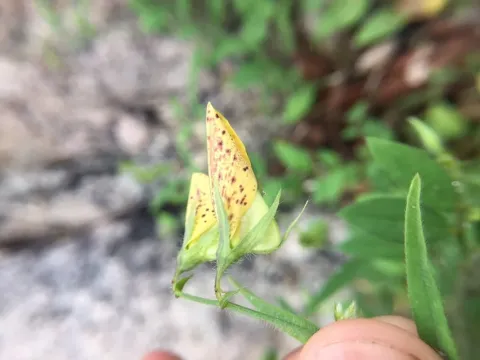
Crotalaria hirsuta
Crotalaria hirsuta
Crotalaria hirsuta is typically sown when the soil temperature consistently exceeds 15-18 degrees Celsius for active germination.
What the section contains
Crotalaria hirsuta
Seeds should be planted at a depth of 2 to 3 centimeters to ensure optimal moisture uptake and proper anchorage for the emerging seedlings.
The seeding rate varies based on agricultural objectives, with an average recommendation of 20–30 kg per hectare for broadcast or row seeding.
It is crucial to sow the crop during a frost-free window, as the species is highly sensitive to even minor temperature drops.
In irrigation-based farming systems, sowing may be staggered to ensure a continuous supply of biomass throughout the growing season.
Belonging to the Fabaceae family, this crop is particularly well-adapted to sandy and infertile soil types where other crops struggle.
The species is strictly heliophilic, meaning it requires full sun exposure to achieve its maximum biomass production potential.
While drought-tolerant once established, the crop performs best with moderate moisture availability during the early vegetative stages.
Soil aeration is critical for Crotalaria hirsuta, as the roots are susceptible to decay if the substrate remains waterlogged for extended periods.
Adequate levels of phosphorus and potassium in the soil significantly enhance the plant's ability to fix atmospheric nitrogen efficiently.
The primary economic value of this crop is its substantial production of green biomass, which serves as high-quality organic matter.
Yields of green mass typically range between 20 and 40 tonnes per hectare, depending on soil quality and the timing of the harvest.
Crotalaria hirsuta acts as a powerful nitrogen-fixing agent, enriching the soil for subsequent crops in a standard agricultural rotation.
The accumulation of biomass is greatest when the plants are provided with sufficient space and minimal competition from weed species.
Proper integration of the biomass into the topsoil creates a nutrient-rich environment that supports robust crop growth for years to come.
The crop can be susceptible to soil-borne pests like wireworms and larvae that attack the roots during the initial growth phase.
Aphid infestations are a common concern, as they can weaken the plant and transmit various viral pathogens across the field.
Fungal issues, specifically Fusarium wilt, may occur in conditions of poor soil drainage or when crop rotation protocols are neglected.
Root-knot nematodes represent a potential threat to Crotalaria hirsuta, particularly in fields with high previous infestation levels.
- Integrated pest management practices
- Strict crop rotation schedules
- Regular field monitoring for pest density
The optimal time for harvesting as a green manure is at the onset of flowering, before the stems begin to lignify and become woody.
Harvesting involves cutting and macerating the green mass, followed by immediate shallow incorporation into the soil to promote rapid decomposition.
Efficient decomposition is facilitated by the relatively low carbon-to-nitrogen ratio found in the young tissues of the plant.
For seed production, the harvest is delayed until the pods turn brown and start to dry, requiring careful handling to prevent shattering.
Post-harvest processing includes thorough drying of the seeds in controlled environments to ensure long-term viability and prevent fungal growth.