
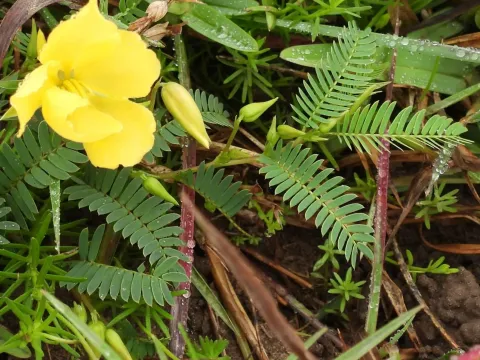
Chamaecrista capensis
Chamaecrista capensis
Chamaecrista capensis is a perennial leguminous species belonging to the Fabaceae family, native to southern Africa. It is widely recognized for its ecological importance and its contribution to soil health through symbiotic nitrogen fixation in its root nodules.
What the section contains
Chamaecrista capensis
The plant exhibits significant morphological plasticity, growing as a spreading subshrub. Its leaves are pinnate, and it produces characteristic yellow flowers, which are typical for the subfamily Caesalpinioideae, adapting well to diverse local habitats.
Regarding soil requirements, this species thrives in well-drained, sandy or gravelly soils. It shows a remarkable tolerance to nutrient-poor substrates, which allows it to colonize lands that are otherwise unsuitable for many intensive agricultural crops.
Climate adaptability is one of its primary strengths. The plant is drought-tolerant, surviving long dry spells in its natural habitat, but it responds with rapid vegetative growth when precipitation is available during the active growing season.
In agricultural practice, it is valued primarily for forage potential. Its ability to regenerate after grazing makes it a useful component in pastoral systems, providing reliable protein sources for livestock in regions where rainfall is erratic.
Root rot pathogens represent the most significant threat to the health of Chamaecrista capensis, particularly in fields with poor drainage. Waterlogging creates anaerobic conditions that facilitate the spread of soil-borne fungi.
Seed-feeding insects, such as bruchid beetles, can cause substantial damage to the reproductive organs of the plant. Without appropriate management, these pests may severely limit the yield of viable seeds required for future sowing.
Foliar diseases can also occur in high-humidity microclimates, characterized by leaf spot symptoms. These pathogens reduce the photosynthetic capacity of the plant, potentially leading to stunted growth if not managed.
Sucking pests, including aphids and whiteflies, serve as potential vectors for viral diseases. Such infections often manifest as mosaic patterns on foliage, significantly impacting the overall vigor and productivity of the crop.
Management of invasive weed species is essential during the establishment phase. As the crop exhibits slow early growth, mechanical or cultural weeding is necessary to prevent shading and nutrient competition until the crop is fully established.