
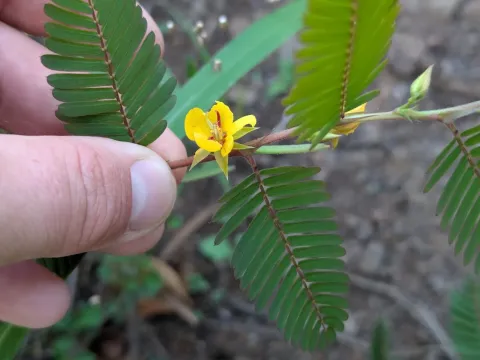
Chamaecrista
Chamaecrista
The sowing of Chamaecrista should begin once the soil temperature consistently reaches at least 15–18 degrees Celsius. This crop is inherently thermophilic and highly susceptible to frost damage.
What the section contains

Chamaecrista
Seeds should be planted at a shallow depth, approximately 2–3 centimeters, to ensure timely germination. Excessive depth significantly delays emergence and increases the risk of seed decay.
Planting density varies depending on the intended use; higher densities are preferred for cover cropping to suppress weed growth through rapid ground shading.
Soil moisture at the time of sowing is critical. Light compaction after planting helps ensure adequate seed-to-soil contact, which is essential for uniform germination across the field.
Chamaecrista typically displays high vigor during the early growth stages if temperature requirements are met, allowing the crop to establish itself firmly before weed competition intensifies.
Chamaecrista belongs to the legume family and is widely recognized for its symbiotic nitrogen-fixing ability. It typically grows as an annual or perennial herbaceous plant or subshrub.
The crop thrives in well-drained, fertile soils with a pH ranging from neutral to slightly acidic. Waterlogged conditions must be avoided as they inhibit root development and cause pathogen buildup.
Climate requirements include high levels of solar radiation and consistently warm temperatures. Chamaecrista is not suitable for regions with short growing seasons or unpredictable cold spells.
Proper nutrient management, particularly the application of phosphorus and potassium, is essential for supporting nodule formation and increasing the plant's overall biological efficiency.
Effective agronomy for Chamaecrista emphasizes the importance of good soil structure and aeration to promote root health and the colonization of beneficial rhizobial bacteria.
The yield of green matter in Chamaecrista is highly responsive to soil fertility levels and the availability of water during peak vegetative growth phases.
As a forage crop, Chamaecrista is valued for its high protein content, making it an excellent component of sustainable livestock feed programs, especially in warmer climates.
When used as a green manure or cover crop, Chamaecrista contributes significantly to soil organic matter and improves soil structure through its dense and deep root system.
Seed production yields are dependent on favorable pollination conditions. Healthy populations of pollinators are often necessary to maximize the number of pods set per plant.
Economic profitability is tied to the timing of the harvest; gathering the crop at the peak of nutrient density ensures high-quality output for both forage and soil improvement purposes.
Fungal infections are the most common threats to Chamaecrista, particularly in humid or overcrowded conditions where airflow between plants is limited.
Root rot pathogens are prevalent in soils with poor drainage. Implementing a diverse crop rotation is a primary defense strategy to prevent the accumulation of these pathogens in the field.
Insect pests, such as leaf-eating beetles or various species of caterpillars, can damage the foliage and reduce the plant's ability to photosynthesize effectively during critical growth stages.
Integrated pest management (IPM) practices, including scouting and the use of targeted biological controls, help manage pest populations without harming beneficial insect biodiversity.
Sanitation practices, such as removing crop residues and choosing resistant varieties, play a vital role in keeping disease incidence at manageable levels.
For forage purposes, harvesting should be performed at the early flowering stage when the balance between biomass volume and nutrient quality is at its peak.
Harvesting for seeds requires waiting until the pods reach full maturity. Monitoring is essential to avoid excessive shattering, as many species are prone to seed dispersal if left too long.
Modern harvesting equipment must be correctly calibrated to ensure efficient gathering while minimizing mechanical damage to the seeds, which can reduce viability.
Post-harvest processing involves immediate cleaning and drying of the seeds to reach safe moisture levels, preventing fungal contamination during storage.
Storage in cool, dry, and well-ventilated conditions is critical to maintaining high germination rates for future planting seasons and ensuring the longevity of the harvest.