
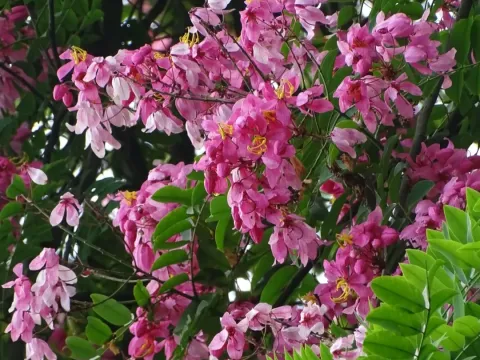
Cassia javanica
Cassia javanica
Propagation of Cassia javanica is generally conducted through seed sowing in a controlled nursery environment to ensure high germination rates.
What the section contains
Cassia javanica
Seeds possess a tough, water-impermeable seed coat, which necessitates mechanical or chemical scarification to facilitate water absorption.
Optimal germination occurs when seeds are planted in a well-draining, warm potting medium maintained at temperatures between 22 and 26 degrees Celsius.
During the early stage of development, seedlings should be shielded from intense direct sunlight and kept consistently moist but not waterlogged.
Transplanting into the field is recommended only when the risk of frost or extreme temperature drops has completely passed in the target region.
Cassia javanica, belonging to the Fabaceae family, is a deciduous or semi-evergreen tropical tree known for its spectacular pink and white flowers.
This species thrives in full sun exposures, which are essential for its vigorous growth and the production of its characteristic abundant floral display.
It prefers deep, fertile, and well-aerated soils with a neutral pH, and it is highly sensitive to poorly drained sites that can cause root rot.
While mature trees exhibit some drought tolerance, consistent moisture levels during the active vegetative season significantly improve tree health.
The tree naturally inhabits tropical ecosystems of Southeast Asia, making it unsuitable for cultivation in temperate climates without protection.
Fungal infections, such as leaf spot and powdery mildew, represent the most common pathological threats, especially in high-humidity environments.
Various pests, including caterpillars, aphids, and scale insects, frequently target the foliage and tender stems of the young Java cassia trees.
Implementing a preventive integrated pest management strategy helps to minimize the damage caused by seasonal insect outbreaks on the canopy.
Maintaining adequate spacing between planted trees is crucial to ensure good airflow, which significantly reduces the risk of fungal proliferation.
Sanitation practices, such as removing fallen leaves and pruning infected twigs, are essential to maintain a healthy growing environment for the tree.